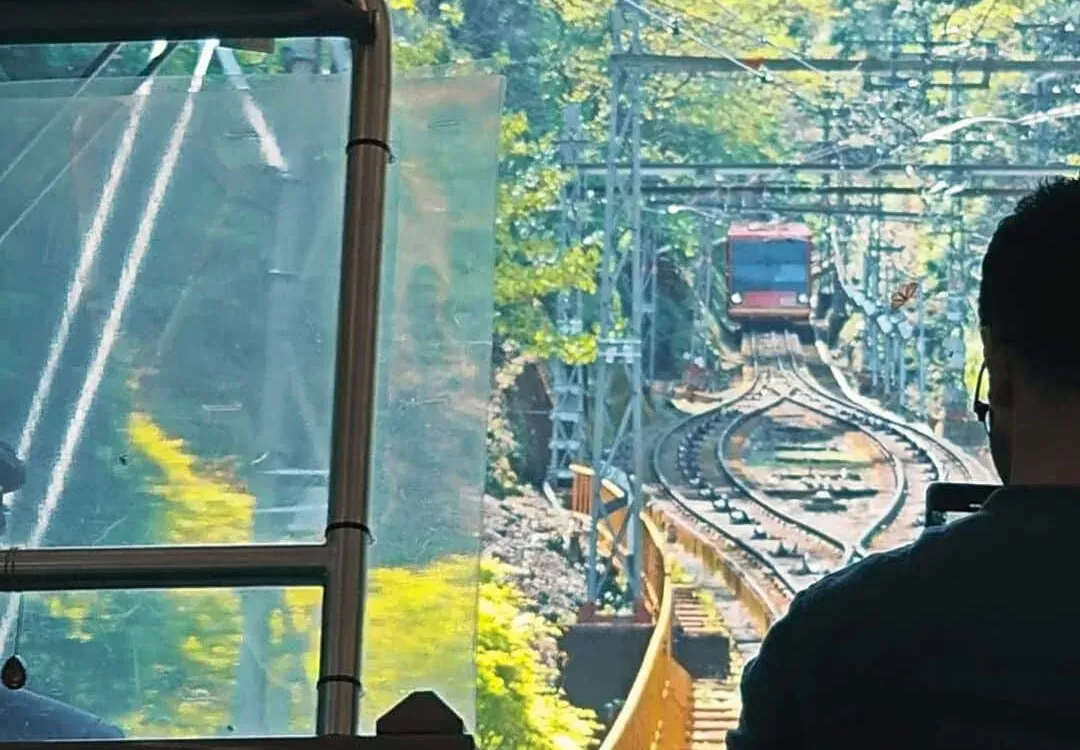
The first question people asked when I said we were walking part of the Kumano Kodo was: Do you walk Kumano Kodo without renting a car?
We did not. I traveled the route with my 65-year-old parents, no rental car, no guide, and no complicated private transfer plan. It worked, but only because we treated the bus timetable as part of the itinerary, not as something to check at the last minute.
That is the honest answer: yes, you can absolutely do the Kumano Kodo without a car. Most international visitors do. But this is not Osaka or Kyoto. The local transport works well when you respect it, and becomes very annoying when you assume there will always be another bus in 10 minutes.
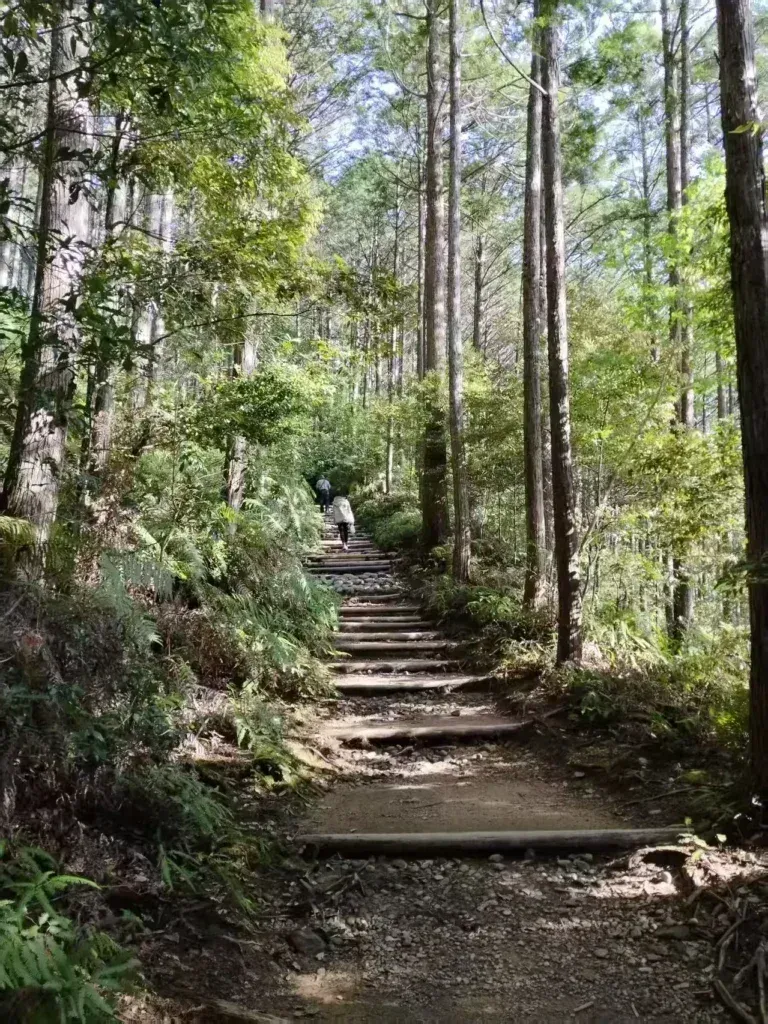
-
TL;DR
-
Yes, the Nakahechi route is doable without a car.
-
JR trains get you to the main access towns such as Kii-Tanabe, Shingu, and Kii-Katsuura.
-
Local buses connect the trailheads, Hongu, Yunomine, Kawayu, Shingu, and Nachi.
-
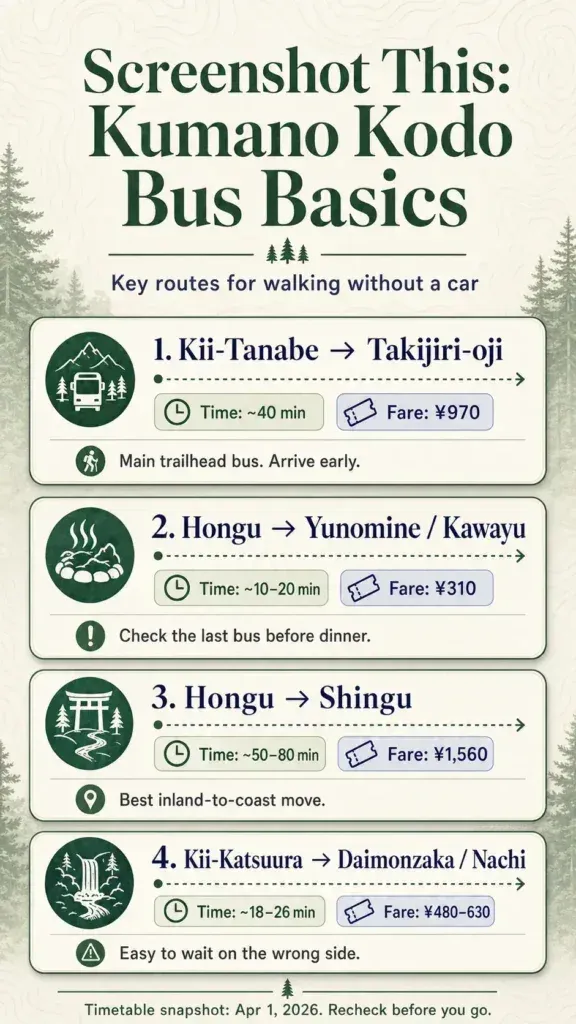
Kii-Tanabe to Takijiri-oji is the easiest first bus: about 40 minutes, around JPY 970, roughly 13 departures a day in the current 2026 official timetable.
-
Hongu to Yunomine / Kawayu is short, cheap, and useful, but you still need to know the last bus.
-
Koguchi is the weak point for first-timers without a car. I would not force it unless you are ready for a harder hiking plan.
-
Send your big luggage ahead. This is one of the easiest ways to stop the trip from becoming miserable.
👉🏻 Find accommodation along the Kumano Kodo route.
The Honest Answer: Is It Realistic?
Yes, it is realistic. But it comes with three conditions.
First, you accept the bus schedule. On the Kumano Kodo, the bus timetable is not background information. It is the frame of the day. Some useful routes only run a handful of times, and the last bus can be earlier than your city brain expects.
Second, you book accommodation early. The villages are small. If you need a private bathroom, a proper ryokan, or a room that works for family travel, I would start looking at least 2-3 months ahead, and earlier for spring or autumn. Around Hongu, Yunomine, and Kawayu, the nicer options can disappear fast.
Third, you keep luggage under control. Without a car boot, every unnecessary kilo becomes your problem. We sent our bigger bags ahead and walked with smaller packs. That one decision made the whole route feel more manageable.
When I planned our trip, the hardest accommodation area was around Hongu, Yunomine, and Kawayu. Two months before departure, many options in Yunomine and Kawayu were already gone, especially if I wanted a private bathroom. We eventually stayed in an Airbnb near Kumano Hongu Taisha instead, and that ended up working very well because we could walk to the shrine area, find simple food, and avoid another late-day transfer.
That is the mindset I would bring to this route: do not ask only “where is the prettiest place to stay?” Ask, “will this place make tomorrow easier?”
How Transport Actually Works on the Kumano Kodo
Think of the Kumano Kodo transport system in two layers.
Layer 1: JR trains. These are your long-distance backbone. From Osaka or Kyoto, the Limited Express Kuroshio takes you down the Wakayama coast toward Kii-Tanabe, Shirahama, Shingu, and Kii-Katsuura. These towns are the easy part of the route.
Layer 2: local buses. These are the pieces that connect the train towns to the trailheads, onsen villages, and shrine areas. This is where most first-time confusion happens, because different companies operate different sections and payment options are not identical.
The Bus Companies You Will See
| Bus company | Main areas for this route | Payment reality |
|---|---|---|
| Ryujin Bus | Kii-Tanabe to Hongu / Hosshinmon-oji, Ryujin area | Cash and some QR payments. No IC cards or credit cards. |
| Meiko Bus | Shirahama, Kii-Tanabe, Takijiri, Kurisugawa | Cash, IC cards, and QR payments. No credit cards. |
| Kumano Gobo Nankai Bus | Hongu, Shingu, Koguchi, Nachi, Kii-Katsuura | Cash, contactless credit cards, QR payments, Apple Pay, Google Pay. No IC cards. |
| Nara Kotsu | Nara / Totsukawa / Hongu / Shingu side | Cash and IC cards. No QR payments or credit cards. |
📌 The simple rule: always carry cash and small bills. Even when a route technically accepts QR or contactless payment, cash is the backup that works everywhere.
Main Bus Routes You Actually Need
The details below use the official timetables available for April 1, 2026. Always recheck before your trip, because local bus schedules can change by season.
| Route | Why it matters | Operator | Time | Fare | Frequency snapshot |
|---|---|---|---|---|---|
| Kii-Tanabe to Takijiri-oji | Main Nakahechi trailhead bus | Ryujin / Meiko depending on departure | About 40 min | JPY 970 | About 13 departures per day |
| Kii-Tanabe to Hongu Taisha-mae | Long inland move if you are skipping or shortening sections | Ryujin / Meiko | About 90-115 min | JPY 2,100 | Direct fast buses plus slower buses via onsen area |
| Hongu Taisha-mae to Yunomine / Kawayu | Onsen village shuttle logic | Mixed operators | About 10-20 min | JPY 310 | Multiple daily departures, but check the last bus |
| Hongu Taisha-mae to Shingu | Move from inland Kumano to the coast | Kumano Gobo Nankai / Nara / others depending route | About 50-80 min | JPY 1,560 | Several daily departures |
| Kii-Katsuura to Daimonzaka / Nachisan | Easiest way to visit Nachi Falls and Kumano Nachi Taisha | Kumano Gobo Nankai | About 18-26 min | JPY 480 to Daimonzaka, JPY 630 to Nachisan | Frequent daytime service |
Kii-Tanabe to Takijiri-oji
This is your first important bus. It takes you from JR Kii-Tanabe Station to Takijiri-oji, the traditional Nakahechi trailhead.
It is a good first confidence boost because the route is straightforward, the stop is well-known, and many other walkers will probably be doing the same thing. The current official access map lists this as about 40 minutes, JPY 970 one way, and roughly 13 departures a day.
Still, I would not arrive at the bus stop at the last second. During busier seasons, morning buses from Kii-Tanabe can fill. If you are starting from Shirahama and passing through Kii-Tanabe, it is even more important to be early. On our trip, the fast bus 91 route we took from Shirahama had many people boarding at Kii-Tanabe, and if it had filled completely, the next option would have meant waiting and reshaping the day.
Hongu Area to Yunomine Onsen / Kawayu Onsen
This is the short shuttle-style move that matters more than it looks.
Hongu, Yunomine, and Kawayu are close on a map, but you still do not want to be walking along mountain roads in the dark because you missed the last bus. The current fare between Hongu Taisha-mae and the onsen area is about JPY 310, with a travel time usually around 10-20 minutes depending on the stop.
Kawayu has several stops, so check which one is closest to your accommodation. Yunomine is tiny, but the bus timing still matters because the town gets very quiet at night.
My honest take: if you are staying in Yunomine or Kawayu, screenshot the relevant timetable before you leave your hotel that morning.
Hongu to Shingu
This is the bus that takes you from the inland pilgrimage side down toward the coast. It follows the Kumano River direction and is one of the most useful no-car moves on the whole route.
The current fare from Hongu Taisha-mae to Shingu Station is about JPY 1,560, and the journey usually takes 50-80 minutes depending on the route. Some buses go more directly, while others route via Yunomine / Kawayu / Watarase.
This is also the bus logic you use if you are combining Hongu with Kumano Hayatama Taisha, Shingu, or the Kumano River boat. If you are doing the boat, the official note is to get off at Michi-no-Eki Kumanogawa.
Shingu / Kii-Katsuura to Daimonzaka and Nachi
For most first-timers, this is the easiest way to finish the Kumano feeling without forcing the full Koguchi-to-Nachi hike.
From Kii-Katsuura Station, buses run to Daimonzaka, Nachi-no-Taki-mae, and Nachisan. The 2026 timetable shows frequent daytime service from around early morning to late afternoon. The ride from Kii-Katsuura to Daimonzaka is about 18 minutes, and to Nachisan about 26 minutes.
The fare is about JPY 480 to Daimonzaka or JPY 630 to Nachisan. If you plan to ride up, stop at Daimonzaka, continue to Nachi Falls, and ride back down, check the Nachi Area World Heritage Ticket. The current mobile ticket is JPY 1,260 for adults, which can make sense if you are doing multiple rides in the Nachi area.
One small mistake we nearly made: make sure you are standing on the correct side of the road. At Kii-Katsuura / Daimonzaka-type stops, it is easy to follow other confused travelers and accidentally wait for the wrong direction.
Section by Section: What Works Without a Car
Here is the route logic I would use for a first Kumano Kodo trip without a car.
| Section | No-car feasibility | My take |
|---|---|---|
| Kii-Tanabe to Takijiri-oji | Easy | The standard first bus. Arrive early for popular morning departures. |
| Takijiri-oji to Takahara | Easy if walking | A real trail start. No car needed if you are comfortable walking out. |
| Takahara to Chikatsuyu | Manageable | Works best if your accommodation is already booked. |
| Chikatsuyu to Hongu area | Needs planning | Bus gaps and lodging pressure matter here. Do not wing it. |
| Hongu to Yunomine / Kawayu | Easy but timetable-sensitive | Short ride, low fare, but last bus timing matters. |
| Hongu to Shingu | Workable | Very useful for moving from inland Kumano to the coast. |
| Koguchi section | Limited | I would skip this on an easier first trip unless you really want the hard version. |
| Daimonzaka to Nachi Taisha | Easy | Good final highlight by bus from Kii-Katsuura or Nachi Station. |
The section I would be most careful with is Koguchi.
The full Kogumotori-goe / Ogumotori-goe logic can be deeply rewarding, but it is also much harder logistically. Koguchi has limited accommodation and fewer bus options. If you start late, move slowly, or cannot get the right room, the route becomes stressful very quickly.
We skipped the Koguchi section and chose a more practical first trip: Hongu, the Kumano River boat toward Shingu, Kumano Hayatama Taisha, JR / bus onward to Kii-Katsuura, and then Daimonzaka plus Nachi Falls after a rest day.
I do not think that makes the trip less valid. For a first Kumano Kodo, especially with parents or non-hardcore hikers, I would rather finish a version that still feels meaningful than force the hardest route and spend the whole time worrying.
Luggage: The Thing That Can Ruin the Mood Fast
Walking mountain trails with a full-size suitcase is not a charming pilgrim experience. It is just bad planning. If you are traveling without a car, luggage is one of the first problems to solve.
My simplest advice is this: Send your main suitcase ahead and walk with a small trail pack.
We used regular Japanese luggage shipping and sent our bigger bags ahead to Hotel Urashima in Kii-Katsuura. In our wider Kii Peninsula trip, sending two bags cost around JPY 5,000 total, and it was absolutely worth it. Luggage had already caused tension once in our family, and I would not repeat that mistake on a mountain route.
There are two main luggage options:
Option 1: Official Kumano Travel daily luggage shuttle
This is the cleanest option if your accommodation is booked through KUMANO TRAVEL and you want same-day luggage transfer between trail accommodations. The important catch is timing: official daily luggage shuttle arrangements need to be booked well in advance, currently at least 20 days ahead, and are not something you can simply arrange last minute after arriving in Tanabe.
This works best for classic Nakahechi walkers who already know each overnight stop.
Option 2: Yamato / TA-Q-BIN or other next-day shipping
This is what I think many first-timers should consider if they are doing a bus-assisted route or only need their main suitcase again at the end.
Yamato TA-Q-BIN can be arranged at many hotels, convenience stores, airports, and other shipping points. Around Kii-Tanabe, the official tourism bureau lists options near the station, including convenience stores and shipping counters. The official sample pricing for Kansai-area Yamato shipping shows a 160 cm bag at around JPY 2,510, though you should confirm the current price on site.
The tradeoff is that this is not daily hiking luggage transfer. It is better for sending your main bag to a later hotel, such as Shingu, Kii-Katsuura, Osaka, or another major stop.
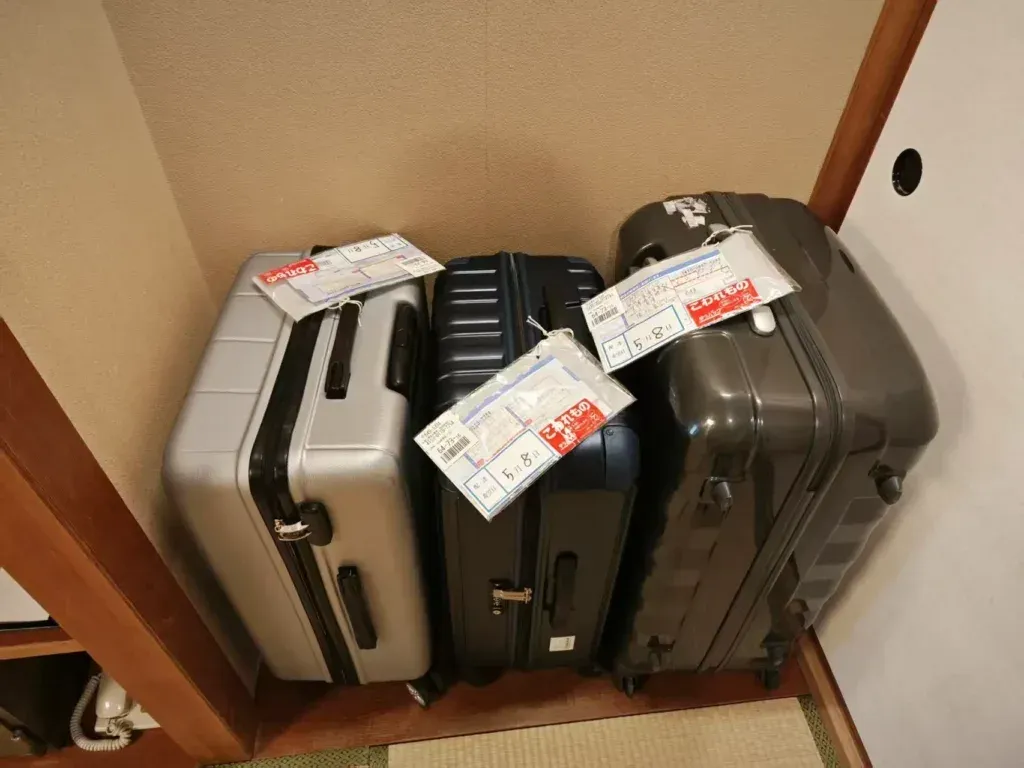
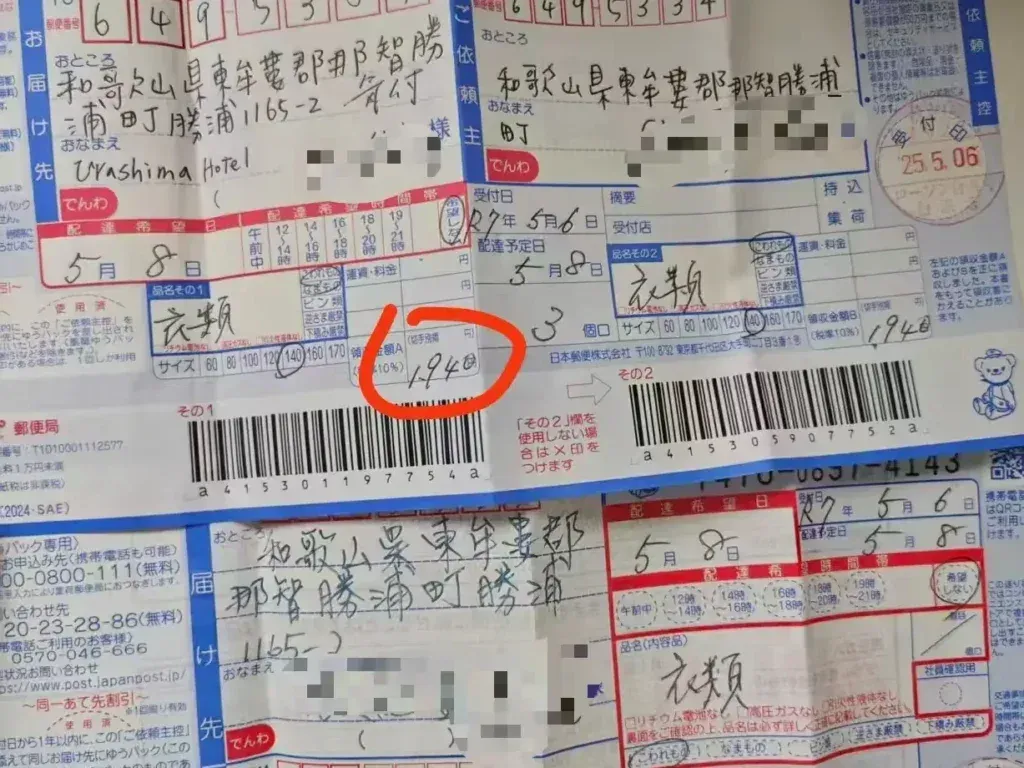
👉🏻 Book accommodation that can receive luggage before you ship your suitcase.
Where to Base Yourself Without a Car
I already have a separate guide on where to stay on the Kumano Kodo. If you are still deciding where to sleep along the route, I recommend reading that guide first.
If you are planning without a car, these are the three bases I would think about first.
| Base | Why it matters without a car | My practical take |
|---|---|---|
| Kii-Tanabe | Best setup point for the Takijiri-oji trailhead bus | Stay near the station, sort luggage, check bus times, then start clean the next morning. |
| Hongu area | Main inland bus node for Hongu, Yunomine, Kawayu, Shingu, and Hosshinmon-oji | The safest middle base if Yunomine or Kawayu is sold out, or if you finish walking later in the day. |
| Kii-Katsuura | Best coast-side base for Daimonzaka, Nachi, JR trains, and post-hike recovery | Worth protecting as your ending base, especially if you want Nachi to feel easy instead of rushed. |
If your route is more classic, Chikatsuyu may also matter because it protects the walking rhythm. If your route is more onsen-focused, Yunomine or Kawayu may be worth the extra planning. But I would treat those as route-specific choices, not default answers for everyone.
My own trip proved this in a very practical way. Yunomine and Kawayu were already hard to book with our requirements, so we stayed near Kumano Hongu Taisha instead. It was not the most romantic onsen answer, but it made the evening easier: supermarket nearby, simple food possible, and no extra transfer after walking.
For the full accommodation breakdown, use my separate guide: Where to Stay on the Kumano Kodo for First-Time Walkers.
Our recommendation Hotel near Kii-Tanabe, Hongu, or Kii-Katsuura for a car-free Kumano Kodo route 👉🏻
Common Mistakes Car-Free Travelers Make
Not checking the bus timetable before the day starts
This is the biggest one. Check the timetable the night before, screenshot it, and know your second-best option. Mobile signal can be unreliable, and some stops are not places where you want to improvise.
Assuming taxis will save you
Taxis exist in the region, but this is not a city where you casually open an app and solve the problem in five minutes. The official tourism bureau lists taxi companies around Tanabe, Nakahechi, and Hongu, and Kumano Travel also has taxi booking options, but I would treat taxis as something to arrange ahead through your accommodation, not as a casual backup.
Booking accommodation too late
Yunomine, Kawayu, Chikatsuyu, and desirable Kii-Katsuura hotels can all become bottlenecks. If your dates are fixed, lock the key stays first and then build transport around them.
Forgetting cash
Every bus company accepts cash. Not every bus company accepts IC cards, QR payment, or credit cards.
I would carry enough cash for at least one full travel day, plus backup. Around Hongu there are some ATM options, but I would not make your mountain day depend on finding one.
Carrying too much
If you are not used to hiking with weight, do not make the Kumano Kodo the place where you test that. A 25-30L daypack is usually a much better idea than dragging your main travel bag through every move.
Planning the route too tightly
Give yourself margin. Missing one bus can shift the whole afternoon. A rest day in Kii-Katsuura or an easier Hongu plan can make the route feel much better than a schedule that only works if every bus, hike, and meal goes perfectly.
Practical Quick Reference
ℹOfficial bus resources
- Tanabe City Kumano Tourism Bureau bus page: tb-kumano.jp/en/transport/bus
- How to ride local buses and payment options: tb-kumano.jp/en/transport/bus/how-to-ride-a-local-bus
- Kii-Tanabe / Shirahama to Hongu timetable: official PDF
- Hongu to Yunomine / Kawayu timetable: official PDF
- Hongu to Shingu timetable: official PDF
- Kii-Katsuura / Nachi to Nachisan timetable: official PDF
- Shingu to Nachi / Kii-Katsuura timetable: official PDF
Luggage resources
- Official luggage shuttle and storage guide: tb-kumano.jp/en/resources/luggage-shuttle-storage
- Daily luggage shuttle works best when booked through Kumano Travel with your accommodation.
- Yamato / TA-Q-BIN works better when you only need to send your main bag ahead to a later hotel.
Taxi resources
- Official taxi list: tb-kumano.jp/en/transport/taxi
- If you think you may need a taxi, ask your accommodation before the day starts.
JR passes and bus passes
The JR-West Kansai WIDE Area Pass can be useful if your route is mostly JR trains, especially if you are using the Limited Express Kuroshio. But it does not solve the local bus sections from Kii-Tanabe to Takijiri / Hongu.
The Ise-Kumano-Wakayama Area Tourist Pass can be useful for some coastal and Kumano-area moves, but you still need to check exactly which bus companies and routes are included. Do not buy it assuming it covers every bus on the Nakahechi.
For Nachi, check the Nachi Area World Heritage Ticket if you are doing multiple bus rides between Kii-Katsuura, Nachi Station, Daimonzaka, and Nachisan. The mobile ticket currently lists JPY 1,260 for adults.
If the transport still feels too complicated, this is where a guided Kumano Kodo tour can make sense. You are paying for someone else to absorb the schedule, luggage, accommodation, and transfer decisions.
FAQs — Kumano Kodo Without A Car
Do I need to reserve buses in advance?
For most local route buses, no. You usually board and pay when you get off. The bigger issue is capacity and frequency. In busy seasons, popular morning departures from Kii-Tanabe and Hongu can be crowded, so arrive early.
Can I use Suica or ICOCA on Kumano Kodo buses?
Sometimes, but not everywhere. Meiko Bus and Nara Kotsu accept IC cards on relevant routes. Ryujin Bus does not accept IC cards. Kumano Gobo Nankai Bus accepts contactless credit cards and digital payments, but not IC cards. Carry cash.
How many days do I need?
3 days is enough for a highlights version, not including your departure day. 5 days is a better first-timer rhythm if you want to walk, rest, and enjoy the onsen side. 7 or more days gives you room for the fuller Nakahechi and Kii-Katsuura ending.
Can I do the Kumano Kodo without a car and without a tour?
Yes. This is exactly how many international walkers do it. The key is to plan around buses, not around an imaginary flexible transport system.
Final
Doing the Kumano Kodo without a car is not difficult in the way people fear. You do not need to rent a car, and you do not need to join a tour just because the route looks rural.
What you do need is a different style of planning. Choose accommodation based on route logic. Screenshot bus timetables. Carry cash. Send your big luggage ahead. Build in enough margin that one missed bus does not ruin the whole day.
For a first trip, I would rather make the route slightly easier and actually enjoy it than force the most complete version and spend every day tired, hungry, and worried about transport. Kumano is better when the logistics are quiet enough for you to notice where you are.
📒 More For Japan
There are more relevant reads from Travel Wishlist about planning a trip to Japan.
- Want the full day-by-day beginner route? Read: Kumano Kodo, Japan Itinerary: A Realistic 5-Day Plan for Beginners
- Searching for where to stay on the Kumano Kodo? Read: Where to Stay on the Kumano Kodo for First-Time Walkers
- Thinking of extending the trip beyond the trail? Read: Kii Peninsula Japan 7-10 days Itinerary
- Looking for a shukubo stay on Koyasan? Koyasan Temple Stay Guide
- Explore the central of Japan in winter? Read: Must-See Dragon Route Itinerary in Central Japan
Last updated: 2026-05-17