Shanghai has more coffee shops than anywhere else in the world, which sounds like a statistic until you are standing on a corner with four of them in eyeshot at eight in the morning.
I drink mostly milk coffee — maybe eighty per cent milk, twenty per cent black — and I have worked through most of this city’s coffee over the years. What follows is not a ranking. It is what I would go back to, what I would send a visitor to, and the six places I would walk past.
If you are still working out how the days fit together, start with first time in Shanghai. This page is just the coffee.
Start with the chains, not the independents
This is the counter-intuitive part, and it is the reason to read this page at all. The most interesting coffee in Shanghai is not the independents. It is the Chinese chains you have never heard of.
Manner is the one I would send everybody to. It costs about ¥5 more than the cheap delivery brands, and the difference is in the beans — more aroma, more body, a cup that tastes like someone chose the coffee. A flat white runs around ¥15 to 20.
Two things I like about it. Bring your own cup and they will fill it, which almost nobody outside China does properly. And the flagship on West Nanjing Road has a transparent roasting room, so you can watch the beans move while you wait.
Seesaw is the other one worth a visit, with a caveat: it is a sit-down brand. Go if you want a proper seat, a table, and somewhere to talk. If you just want a cup in your hand, Manner does that better.
Luckin and Cotti are the everyday ones. People who work here order one on the way in, every day, and I like them — but be honest about what they are. They are closer to a cold drink with caffeine in it than to coffee, they are very cheap, and they are perfect if you need a daily dose and do not care about the cup.
If you are a coffee person, they are not for you.
If you want to sit down
Seesaw, as above, for the seat and the space.
Baker & Spice is the one I use when I just need somewhere with food, a table and a decent chance of getting one. The coffee is fine. The bread and cakes are better than the coffee. There are enough of them around the city that it works as a fallback rather than a destination.
RAC is the recommendation I am most confident about in this whole section, and it is not really about the coffee. It is about brunch. If you want a long late breakfast and a coffee in the same stop, go here — it is the one I would plan a morning around.
If you care about the coffee itself
Metal Hands does pour-over properly. The Yongkang Road shop is tiny, which is part of the charm and part of the problem, but the coffee is why people know the name.
The one I have not done
O.P.S. on Taiyuan Road I have never been to, and I am not going to pretend otherwise. What I know is that it has no fixed menu: you tell them what flavours you like and they build a drink around it, the seasonal menu turns over, and there is usually a queue.
It is at the top of my own list. I am recommending it on reputation and on the fact that I want to go, not on experience.
If you want a room
Two places here are worth the trip for the space, and they are very different propositions.
% Arabica on Wukang Road is Japanese minimalism in a beautiful building, and it is the one to go to if you want the photograph. It is on the expensive side for a chain, around ¥35 to 50 a cup.
The Starbucks Reserve Roastery on Nanjing West Road is not really a coffee shop, and I mean that as a compliment. Each one is designed for its city, there is a bar doing cocktails, and there are moving installations inside. Go to look at it.
One warning, and it is a real one: it is always, always packed. There is no seat, there is a queue, and there is no time of day that fixes this. I still think it is worth seeing. Just do not plan to sit down.
If you want a view
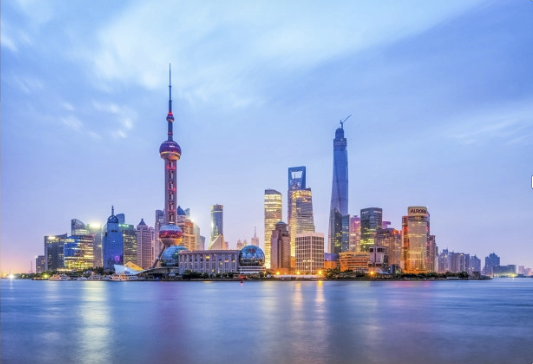
For a view with a coffee, I would go to the Manner at the North Bund — the one in the glass building looking across at the Pudong skyline. It is a Manner, so it is cheap, which is exactly why it beats the alternatives.
The other two options people get sent to — the hotel lounge high up in Pudong, and The Press on Fuzhou Road — I would not go to for the coffee. The Press is a genuinely lovely room, all literary and learned, and I have held an event there; the coffee and food are unremarkable. The hotel one is the same story at ten times the price.
If it is a room you want rather than a cup, go to one of the bookshops instead. There is one in Pudong with a good café, and the new Tsutaya.
And one thing that is not about coffee
Tim Hortons coffee is forgettable. Its cheese bagel is very good and very cheap, and it is the thing I would grab if I were planning an afternoon on a bike, a picnic, or a walk along the West Bund.
What I would skip
- M Stand. Strong, expensive, and I do not think it has a point of view. The mille-feuille is genuinely famous, so if you want cake, fine. For coffee, no.
- Rumors Coffee. A champion barista’s counter, which means high prices and a queue. Go if you are a serious coffee person who wants to talk to a champion. Otherwise it is a lot of money for a cup.
- Trung Nguyen. Vietnamese coffee is wonderful. Drink it in Vietnam.
- Blue Bottle. I would rather drink Blue Bottle in San Francisco or Japan. In Shanghai it is not why you came.
- The view-led places, for the coffee. For the room, sure.
Ordering, and the part people get stuck on
You can order in English in almost anywhere central, and the vocabulary is standard. A few words help in the smaller neighbourhood shops:
- meishi — americano, literally “American style”
- natie — latte. Add re de for hot or bing de for iced
- aobai — flat white, literally “Australian white”
- shouchong — pour-over, literally “hand-brewed”
- danpin — single origin
The thing that actually stops visitors is not language, it is paying. The chains expect you to order through a mini-program, which needs a working wallet — set that up before you fly and this all becomes easy.
Picking where to stay also decides which of these you will walk past every morning.
My take
If you only do one thing from this page, go to Manner. It is the clearest expression of what Shanghai coffee actually is: better than it has any right to be at that price, made fast, and drunk standing up on the way to somewhere.
Then, if you have an afternoon, sit down somewhere — Seesaw, RAC, or a tea house instead if you would rather do the Chinese version of sitting still for two hours.