Shanghai has thousands of tea houses — Shanghai WOW put the number near 4,000 — and almost none of them were built for tourists.
That’s the part most English-language guides miss. They’ll send you somewhere photogenic for the tea ceremony photos. What they don’t mention is that a large share of tea houses in this city function closer to a private office you rent by the pot: a door that closes, a minimum spend, and people inside having meetings.
I know that one first-hand. In November 2024 I booked a private room at Yinxi (隐溪茶馆) for a client meeting — eight of us, a set package that covered the room minimum, a little over ¥2,000 all in. Nobody was there for a ceremony. We were there because it was quiet and it had a door.
So this guide doesn’t rank 8 pretty rooms. It sorts eight places by what you’d actually do in them: the old Shanghai teahouses, the design-led tea rooms that replaced them, and the working tea houses where business gets done.
Quick comparison
| Tea house | What it is | Typical spend | Best for | Work-friendly? |
|---|---|---|---|---|
| 湖心亭 Huxinting | Historic landmark, Yu Garden | ¥88+ per set | First-timers | No — crowded |
| 匠巷茶叙 Artisans Tealogue | Old house, craft space | ¥59–80 | A quiet hour + browsing | Courtyard yes, unconfirmed |
| AKALCHA | Tea tasting bar | ¥27–32 casual / ¥128–228 tasting | Seeing what tea can do | No — 8 seats, timed |
| 元古云境 Yuan Gu | Seasonal Chinese tea & dessert | ~¥200–217 | A long afternoon | Daytime only, unconfirmed |
| 七山茶院 Qi Shan | Designer tearoom, 3 seats | Not published | Serious tea, beautifully served | No — 3 seats |
| 梧桐茶室 Wutong | Hidden tea room + garden | ~¥63 | Cheap quiet in the Former Concession | Quiet, unconfirmed |
| BEI TEAHOUSE | Ming-Qing house, Amanyangyun | ¥171–198 | A destination trip | Has private rooms |
| 隐溪茶馆 Yinxi | Business tea house | ¥140–152 | Meetings, laptop work | Yes — that’s the point |
If it’s your first time in China: Huxinting, and accept the crowds.
If you want the nicest cup: Qi Shan or AKALCHA.
If you need to take a call in peace: Yinxi.
The three jobs a Shanghai tea house does
Before picking a place, it helps to know which of three things you’re walking into. Editorial framing based on how these venues work, not a claim that I’ve been to all nine.
The old teahouse. Historic, often attached to a landmark, priced partly for the setting. Tea arrives in a lidded bowl or a pot, there’s usually a floor-level set-menu, and the crowd is mixed tourists and older locals. This is the version foreigners picture.
The design-led tea room. The last five years produced a wave of these — often inside restored houses, sometimes inside fashion or lifestyle stores. Tea is treated like specialty coffee: single origin, precise brewing, small space, higher price per cup. Genuinely good tea, but seating is scarce and it’s not where you’d open a laptop.
The business tea house. Barely written about in English, and arguably the most useful. Private rooms, a minimum spend instead of an hourly fee, hot water left on your table. This is where deals get discussed in Shanghai.
Old Shanghai: the historic teahouses
1. 湖心亭 Huxinting — The One Everyone Recognises
Yu Garden, Huangpu · ¥88–1,288 per set · from 09:30 · OTA tickets or walk in
One of Shanghai’s oldest surviving teahouses, sitting on the pond beside Yu Garden’s zigzag bridge, with an interior refurbishment completed in 2026.
Here’s the honest version. This is the teahouse your photos will look like, and it’s the easiest one in this guide for a foreigner to actually book — it’s ticketed on Trip.com, Ctrip and Qunar, so there’s no phone call in Chinese involved. The ground-floor tea sets start at ¥88. Above that it climbs fast: Longjing or jasmine silver needle around ¥288, a Tieguanyin set for two at ¥299, Dongfang Meiren at ¥588, and a photography-included “queen” package for two at ¥1,288. A tea-art performance is listed around ¥2,000 and doesn’t include tea.
What it’s not: quiet, or good value for the tea itself. The entire Yu Garden area is heaving, and weekends are worse. If the setting is what you’re buying, great. If you wanted a peaceful cup, go elsewhere.
Good to know: English ticketing is easy; the tea itself is explained mostly in Chinese. Sources disagree on opening hours (Trip.com say 09:30–22:00), so check before an early visit. Listed phone: 021-63736950.
Tea meets design: the new tea rooms
2. 匠巷茶叙 Artisans Tealogue — Old House, Craft Objects, Courtyard
818 North Shaanxi Road, Jing’an · ¥59–80 · 10:00–19:00 · phone 18201940782
An old-house tea space in Jing’an that doubles as a display space for intangible-heritage crafts — lacquer, ceramics — with pieces you can buy, plus an open courtyard.
At ¥59–80 a head this is one of the better-value quiet sits in central Shanghai, and the courtyard is the draw in decent weather. It’s the kind of place where you read for two hours and nobody minds.
Good to know: What’s confirmed is tea and craft workshops — not a structured tea-art class. Some traveller posts describe a “six tea types tasting” that I couldn’t verify anywhere, so don’t book expecting it. Map data supplies the address and hours; I’d call ahead.
3. AKALCHA — Tea as a Tasting Menu
152 Yongyuan Road, Jing’an · ¥27–32 casual, ¥128–228 tasting · ~10:30–18:30 · lab seats must be booked
The most interesting thing happening in Shanghai tea right now. AKALCHA runs one side like a specialty coffee bar and the other like a chef’s counter.
The fast side is walk-in: hand-brewed tea, tea lattes and kombucha at ¥27–32, out in about 30 seconds. The lab side is eight seats, by reservation only, built around seasonal sets that run ¥128–228 and take about an hour. A tea master brews in front of you and talks through what they’re doing. Coverage from 36Kr describes it as regularly fully booked, so book days ahead if you want the lab.
It works because it treats Chinese tea with the same seriousness as single-origin coffee — origin, roast, brewing parameters — instead of heritage theatre.
Good to know: Eight seats means eight seats. Don’t turn up expecting the tasting. Closing time is listed inconsistently (some sources say 18:30, others 20:00).
4. 元古云境 Yuan Gu (Yuyuan Road) — Seasonal Chinese Tea and Dessert
1107 Yuyuan Road, Changning · ~¥200–217 · 11:00–late · Jiangsu Road station (exit 6), ~380m
A three-storey house built around the 24 solar terms — the traditional Chinese calendar’s seasonal divisions — with tea, seasonal desserts and Chinese-style cocktails. Founded in Beijing in 2016; this was the brand’s third Shanghai location.
Note the entrance is on Fenggang Road, not Yuyuan Road. Everyone gets this wrong the first time.
Tea here is properly brewed — rinsed and steeped in the traditional way — with offerings including aged white tea, Qilan, and longrou from the Wuyi mountains. The tea is matched with seasonal sweets, which is why the bill lands around ¥200 a head rather than ¥60. It’s a meal-and-tea afternoon, not a quick cup. There’s a rooftop terrace wrapped in greenery on the third floor.
Good to know: It runs to 2am on some listings and 23:00 on others — if you’re planning a late visit, confirm. It gets busy; mornings are calmer.
5. 七山茶院 Qi Shan — Three Seats, Five Mountains
188 Wuyi Road, Changning · 11:00–20:00 · three seats, first come
Inside Dongliang, the fashion concept store, in a restored old house — a tea counter with, per several write-ups, just three seats and a menu of around three teas.
This is the connoisseur’s stop. The team sources from specific mountain plots and had their vessels made to order in Jingdezhen. Each tea comes paired with a small bite — a Yunnan dianhong served with three pieces of dried tangerine, for instance. Before you order, the staff have you smell a fragrance made from the tea they brewed that morning, which is how you choose.
There’s also a bookable gongfu tea session on the third floor, and a tea-and-whisky collaboration on the menu.
Good to know: Three seats means you may simply not get in. Go early, and don’t plan a group here. Note the address — this is on the same road as Yinxi, 100 metres or so apart, which gives you a neat pairing if you want both the serious-cup and the working-room versions of Shanghai tea in one trip.
6. 梧桐茶室 Wutong Tea Room — The Cheap Quiet One
15 Taojiang Road, Xuhui · ~¥63 · Mon–Thu 10:00–18:00, Fri–Sun 10:00–20:00
A small tea room tucked inside tbh’s villa (the Beast homeware store) on Taojiang Road, with a garden behind it and a lawn.
This is the cheapest quiet seat on the list at roughly ¥63, and it’s quiet largely because it’s hard to find — you walk through the store to reach it. The menu runs to herbal and fruit teas alongside Chinese tea, including the rose herbal tea and the aged-tangerine drink regulars come back for. There are artist ceramics and wooden furniture on display and sale, and the upstairs runs rotating artist residencies and exhibitions.
I haven’t been. The appeal is clear from everything published about it: garden, no crowds, low price, deep in the plane-tree district that foreigners actually spend their time in.
Good to know: Because it sits inside a retail space, it sometimes closes for private events or installation changes — it showed a temporary closure across 22–24 September 2026. Check the day you plan to go. No wifi or power access has been confirmed, so don’t count it as a work spot without checking.
7. BEI TEAHOUSE — The Ming-Qing House Near Amanyangyun
1515-15 Zhongqing Road, Minhang · ¥171–198 per person · Mon 14:00–19:00, Tue–Sun 10:00–19:00
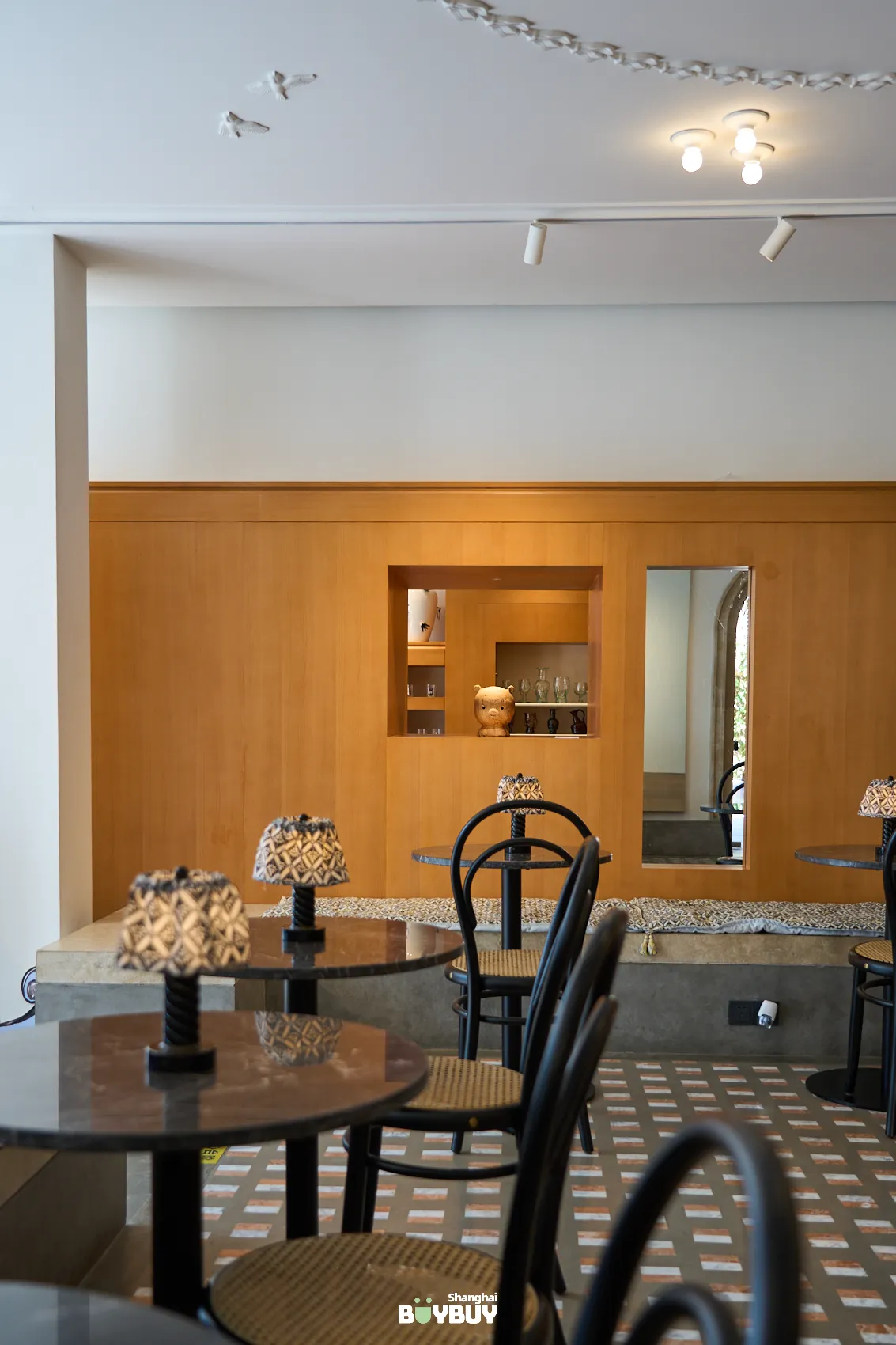
A tea house inside a historic house rescued from Jiangxi province and rebuilt in Shanghai, next to Amanyangyun — designed by Kerry Hill Architects, the studio behind much of Aman’s work, and listed on Aman’s own site. Three courtyards, an 8.6-metre ceiling, and a “four waters return to the hall” roofline where rainwater chains down into the courtyard.
The soundtrack is Kunqu opera composition made specifically for the space by the opera master Zhang Jun. Tea is served in silver pots for the boiled styles — dark tea, aged white, ripe pu’er, tangerine peel — and in white porcelain for the steeped ones. Private rooms named Beishan and Beihai sit upstairs.
Two things worth knowing before you go. It is far — Minhang’s Maqiao area, well outside the city centre, which is why people call it a destination tea house — impressive, but not something I’d cross Shanghai for. And the tea comes already brewed in the pot, not refilled; the pots are large enough to last an afternoon, but this isn’t the endless-hot-water setup you get at a working tea house.
Good to know: Around ¥198 per set per Shanghai WOW’s write-up, with map data showing ~¥171 average. Listed phone: 15026596458.
The working tea house
8. 隐溪茶馆 Yinxi (Zhongshan Park) — Where I Actually Go
84 Wuyi Road, 3–4F, Changning · ~¥140–152 · 10:00–24:00 · private rooms by phone · Zhongshan Park station, exit 8, ~200m
The only place on this list I’ve been to, and the reason this guide exists.
In November 2024 I took a client meeting here — eight people, a foreign director visiting from headquarters. We booked a private room by calling the number listed on Dianping, and took a set package that covered the room minimum. Total came to just over ¥2,000 for eight. We were there to talk business, and nobody looked at us twice for it.
What that actually looks like:
- Everything is a private room. No open seating, which is exactly why it’s silent. Every other table is doing the same thing you are.
- There’s no English menu. Staff managed fine in basic English — we got through the whole booking and session — but ordering was done via the package, not off a menu.
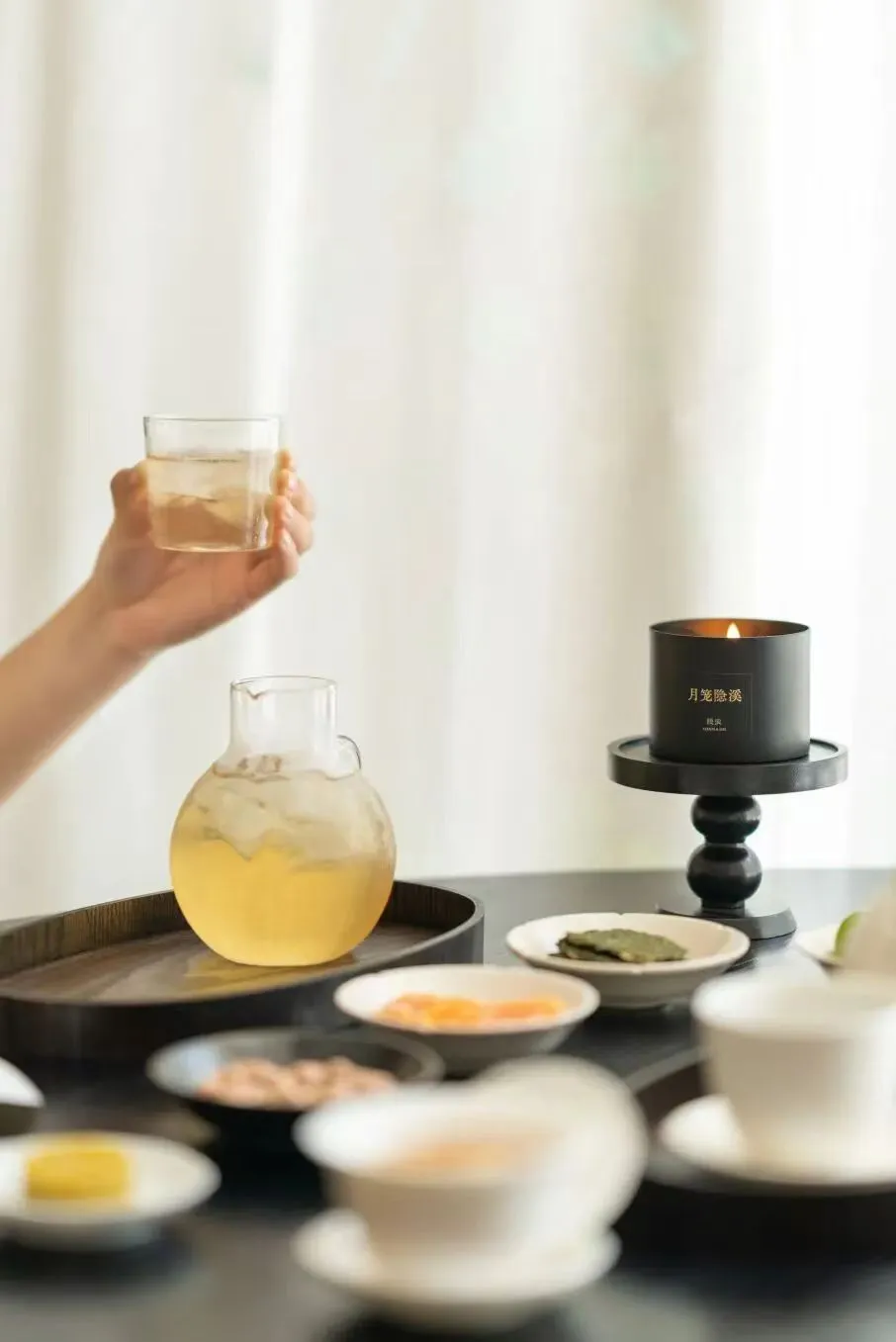
- Hot water is self-service. They brew the first pot for you so it’s ready when you arrive, then leave you to top it up. We had 桃夭 (taoyao) and raw pu’er, brought as pots.
- Prices are set up for groups. Public data shows roughly ¥140–152 per head, which lines up with what we spent. It isn’t cheap for one person nursing a laptop, and it isn’t meant to be.
Who this is for: anyone in Shanghai for three days who needs somewhere quieter than a hotel lobby to take a call or hold a small meeting, and doesn’t want to do it in a coffee shop. Also genuinely workable for a small event — a webinar, a private session. There are other branches (Wuzhong Road, Jianguo West Road, the Bund) but Zhongshan Park is the one I know.
Who should skip it: anyone on a sightseeing trip. The China-tea atmosphere is low; it’s a business venue that happens to serve tea, and if you came to Shanghai for a tea ceremony you’d be puzzled by it. Each branch is decorated nicely and it’s genuinely quiet, but this is infrastructure, not an attraction.
Good to know: Booking numbers listed are 52650517 / 52860517. Closing time is listed as both 23:30 and midnight depending on the source.
Where to stay, and which tea house that puts you near
Shanghai is enormous and these places are spread across it. I wouldn’t cross the city for a tea house — none of them is a destination worth building a day around. Pick whichever one is closest to where you’re sleeping, and let it be a good hour rather than a mission. My Shanghai guide covers which neighbourhood suits you overall — this table is only about getting to the tea.
| If you’re staying in | Go to | Rough travel |
|---|---|---|
| Near Yu Garden / the Bund | Huxinting | 5–15 min walk |
| Jing’an Temple / West Nanjing Road | Artisans Tealogue, Old Shanghai Teahouse, AKALCHA | 10–25 min |
| Yuyuan Road / Jiangsu Road | Yuan Gu, Yinxi, Qi Shan (all three within walking distance) | 5–15 min |
| Former French Concession (Hengshan Road, Taojiang Road) | Wutong Tea Room | 5–15 min |
| Amanyangyun / Minhang | BEI TEAHOUSE | 5–10 min; far from everything else |
The Yuyuan Road row is the one worth planning around. Wuyi Road 84 (Yinxi) and Wuyi Road 188 (Qi Shan) are on the same street — you can do the serious three-seat tea afternoon and the working tea house in one block, which covers two completely different sides of Shanghai tea culture without a taxi.
How a Shanghai tea house actually works
These are the bits that trip people up, based on the author’s visit and published details from the other venues.
You’re often paying for time and space, not cups. At the business and old-school venues, expect a per-head cost or a room minimum rather than a price per pot. A package usually covers the minimum — ask when you book. This is why the bill looks high relative to the amount of tea.
Refills vary enormously, and no one tells you. At Yinxi, staff brew the first pot and then leave you a flask to top it up yourself — effectively unlimited. At BEI TEAHOUSE the pot arrives brewed and isn’t refilled, though it’s large enough to last. Neither is wrong; they’re different models. Just don’t assume.
There may be no menu you can read. English menus are rare outside the OTA-ticketed landmarks. The workaround is the same one I used: take a package. Pointing at a set and nodding removes the need for tea vocabulary.
Nobody will rush you. Unlike cafés, lingering is the norm. This is what makes them good for work and long conversations.
Budget summary
- Under ¥100: Wutong (~¥63), Artisans Tealogue (¥59–80), AKALCHA’s counter (¥27–32)
- ¥100–250: Yinxi (¥140–152), Yuan Gu (~¥200–217), BEI TEAHOUSE (¥171–198), AKALCHA’s tasting (¥128–228)
- ¥250+: Huxinting’s upper sets (up to ¥1,288) and tea-art performance (~¥2,000)
- Group rate: A Yinxi private room for 8, package inclusive, came to just over ¥2,000
Final take
If you came to Shanghai to understand Chinese tea, go to Qi Shan or AKALCHA — both treat tea seriously rather than as decoration.
If you came to Shanghai to work, or you’re here for four days and need somewhere quieter than a hotel bar to take a meeting, Yinxi is the useful answer.
And if it’s your first trip and you want the postcard: Huxinting. Just know what you’re buying.