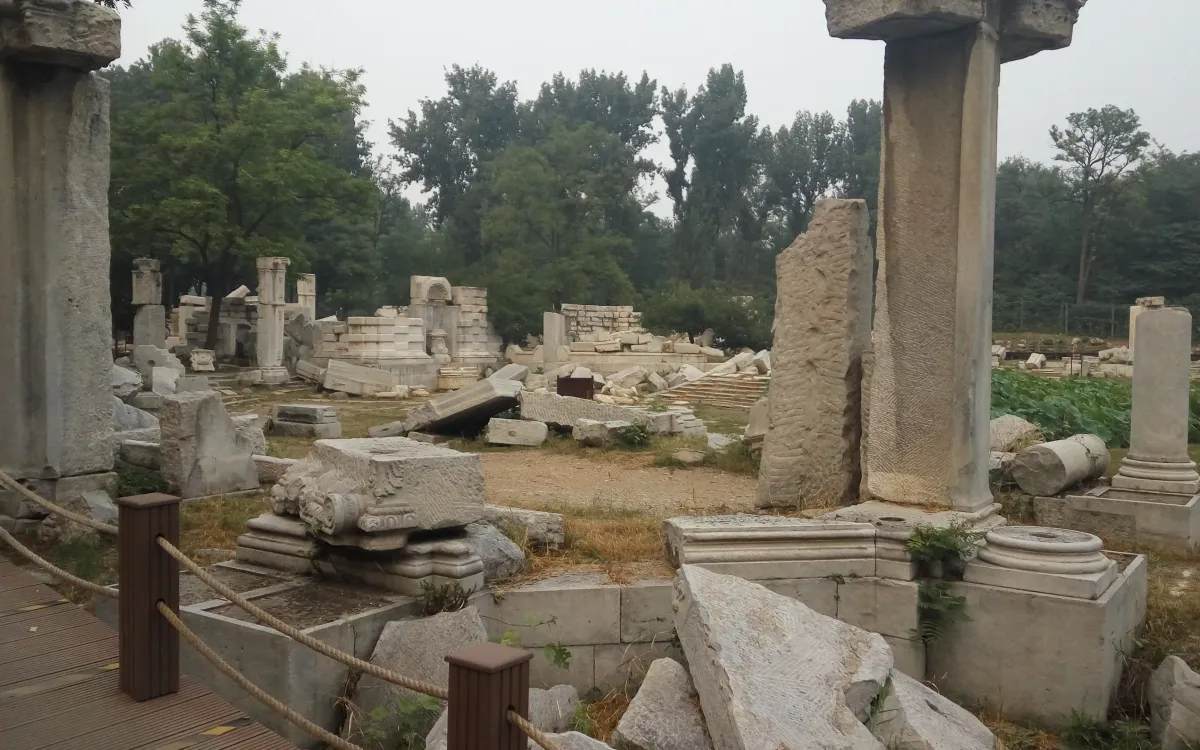
If you plan to see Beijing’s two great imperial gardens in one day, do the Summer Palace first and Yuanmingyuan second. Not the other way round. This is not a matter of taste — it is a matter of closing times, and I found out the hard way.
The two sit minutes apart on Metro Line 4 in the city’s northwest, which makes a same-day visit look straightforward. It is, but only in one direction. I reached Yuanmingyuan around 1pm, spent four hours walking it, and got to the Summer Palace at 5pm. The Tower of Buddhist Incense, the Garden of Virtuous Harmony, Suzhou Street and the museum all stop admitting visitors at 17:30 — and the tower is a climb up Longevity Hill from the gate, so in practice I had already missed all of them. What remained was the lake, the tea houses along the water, and a long walk out.
I came away thinking the Summer Palace had nothing in it. It has plenty. I just arrived after the interesting parts had shut.
Two gardens, two completely different things
Yuanmingyuan, the Old Summer Palace, is a ruin — looted and burned by British and French troops in 1860, and deliberately never rebuilt. It is 350 hectares of lakes, woodland and scattered stonework.
The European-style fragments at Dashuifa draw most visitors, but they are a small part of the grounds. Most of it is quiet and green. I spent four hours there and thought it worth every step, though some of what you see is reconstructed rather than original.
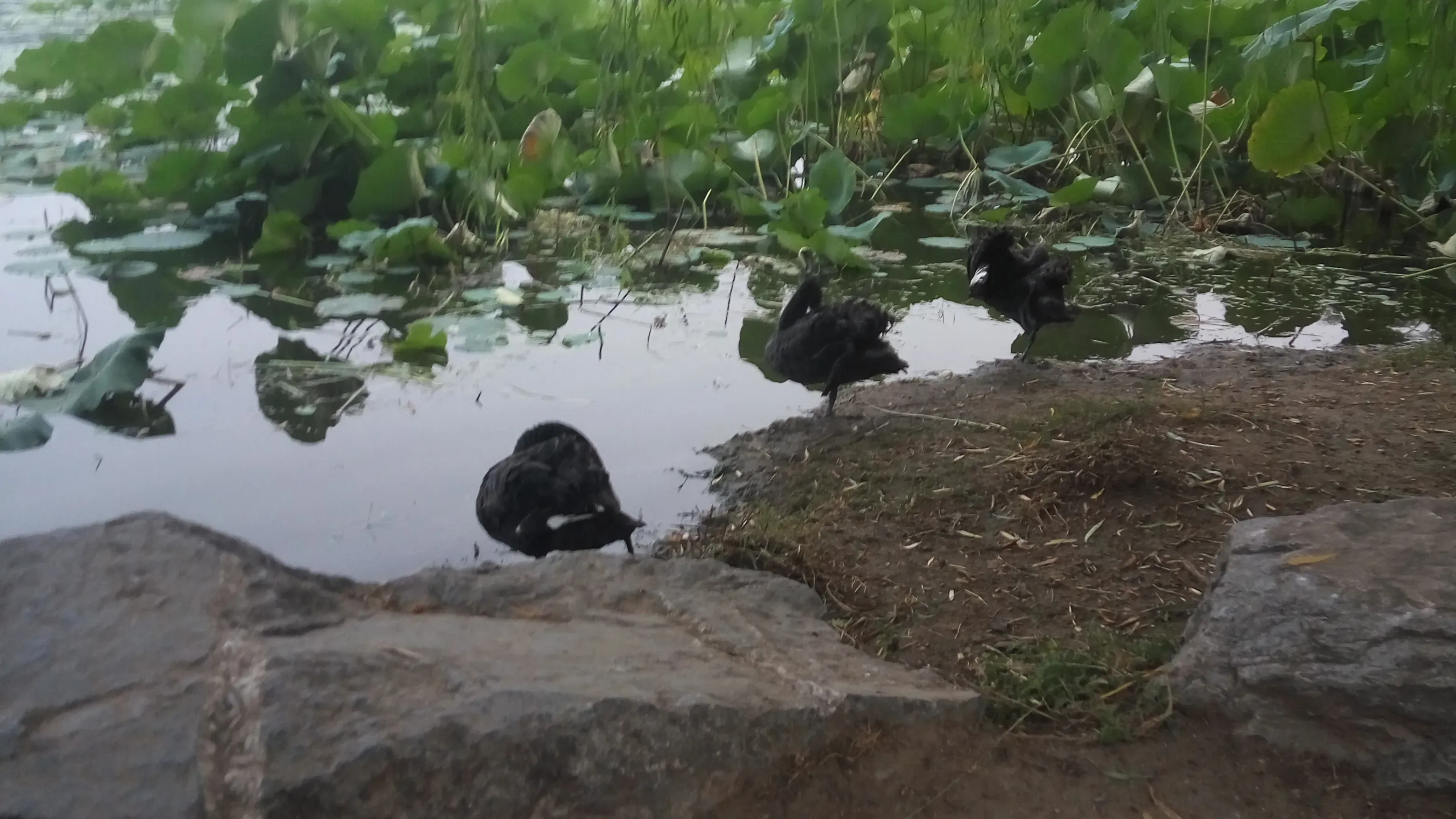
The quiet parts have their own residents — the lotus ponds are home to a colony of black swans, and in the late afternoon you share the paths with them and almost nobody else.
The Summer Palace, or Yiheyuan, is the opposite: a finished product. This is the garden Empress Cixi had rebuilt, with the Long Corridor, the Tower of Buddhist Incense above Kunming Lake, the Marble Boat, and the Seventeen-Arch Bridge. It is intact, painted, and crowded in a way Yuanmingyuan is not.
One is a wound. The other is a palace. Which one moves you more is personal — but they are not substitutes for each other, and that is why doing both is worth attempting.
Why the order decides what you see
| Summer Palace | Yuanmingyuan | |
|---|---|---|
| Peak season closes | 20:00 (last entry 19:00) | 21:00 (last entry 19:00) |
| Inner courtyards | Stop admitting at 17:30, closed Mondays | Ruins and grounds stay open |
| Realistic visit | 2.5–3 hours | 3–4 hours |
The Summer Palace’s content has a hard deadline of 17:30. Yuanmingyuan does not — its ruins read just as well in late afternoon light, and it stays open an hour later. So the morning belongs to the Summer Palace and the afternoon to Yuanmingyuan. Reverse it and you end up paying for a garden you cannot properly enter.
One more thing worth checking before you book anything: the Summer Palace’s inner courtyards close all day on Mondays. I planned around it, but if you do not, you can lose the best part of the garden without anything visibly going wrong at the gate.
How long it actually takes
Four hours at Yuanmingyuan is not unusual if you walk rather than ride the sightseeing shuttle, and it left me tired before I had started the second garden. Add two and a half to three hours for the Summer Palace, plus lunch and the transfer, and you are looking at a full day with very little slack.
If that sounds punishing, it is. Whoever goes second gets the tired version of you.
The part nobody warns you about: food and exits
Yuanmingyuan has very little to eat inside. Bring water and something to snack on; I did not, and by hour three it was the only thing I was thinking about.
The Summer Palace has its own trap. Not every gate is equal. The East Gate has shops and restaurants around it, and the North Gate sits about 300 metres from its Metro station — but the quieter gates on the south and west sides are served only by buses. I came out on the university side, found no shared bikes available, and walked a long way before finding anything reasonably priced. By then I was too tired to care where I ate.
Practical version of that lesson: plan your meal around the East or North Gate, or eat before you go in. Which gate you exit by is not a detail — it decides whether dinner is a five-minute walk or a tired hunt.
If you only pick one
Pick the Summer Palace if you want intact imperial architecture, if you are travelling with children or older relatives, or if you want the photographs people recognise. Pick Yuanmingyuan if the history of 1860 matters to you, if you want quieter paths and shade, and if you are willing to walk for hours.
My own honest answer is less flattering to the Summer Palace. With a free afternoon and no checklist, I would find a pleasant place in the city to sit with tea rather than make the trip out to Haidian — it is genuinely far from the centre. Go early, while you still have energy, as part of a day that already takes you northwest. It is not worth a dedicated late-afternoon trip, which is exactly what I gave it.
Which garden goes first is one decision inside a larger one. How to plan a Beijing sightseeing day sets out the rules this fits into — one hard sight per day, planned backwards from the hour it stops letting people in.
For more along these lines, see city walks and outdoor experiences and the rest of the Beijing guides. If you are building the wider trip, the four-day Beijing itinerary shows where these two fit, and my notes on how long the Forbidden City really takes and on getting to Mutianyu by bus cover the other decisions that shape those days.
Practical details
Prices and hours change, so treat these as a starting point and confirm on the official booking mini-programme before you go.
- Summer Palace: opens 06:00 in peak season, last entry 19:00, closes 20:00. Around ¥30 for entry, ¥60 for a combined ticket covering the Tower of Buddhist Incense, Suzhou Street and the Garden of Virtuous Harmony. Inner courtyards closed Mondays.
- Yuanmingyuan: opens 06:00 in peak season, last entry 19:00, closes 21:00. Around ¥10 for entry, ¥25 for the combined ticket that includes the Western-style ruins and the scale model.
- Getting between them: Metro Line 4. Yuanmingyuan station for the Old Summer Palace’s south gate, one stop to Xiyuan for the East Gate, two to Beigongmen for the North Gate. The ride is minutes; the walking inside the gardens is what eats your day.
What I would do differently
Start at the Summer Palace by 09:00 while the courtyards are open, eat near the East Gate, then cross to Yuanmingyuan for the afternoon. That is the day I should have had.