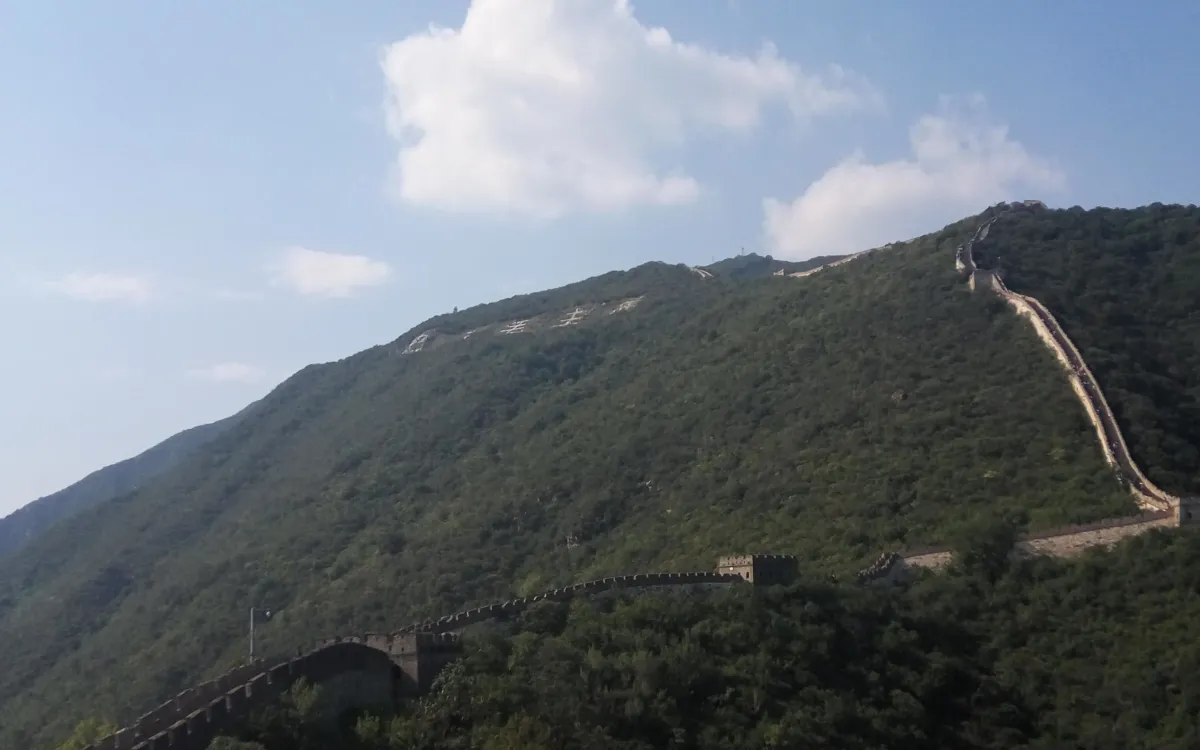
If you are weighing a tour coach against doing Mutianyu yourself, here is the honest trade. The bus costs about ¥20 each way and about three hours each way. I did it solo. Getting there was easy. Getting back is the part nobody plans.
That trade only works if you have more time than money. I had plenty of the first and very little of the second, which is why I found myself on a minibus in Huairou at noon. If a friend asked me today I would tell them to take the direct tourist bus or pay for a car. But I would also tell them what the cheap route is actually like, because “just take the 916” gets repeated online by people who never mention that it eats most of your day.
What the bus route actually is
Dongzhimen Transport Hub, 916 Express to Huairou, then the H23 minibus to the Mutianyu roundabout. Three legs, one transfer.
Metro Lines 2 and 13 and the Airport Express all reach Dongzhimen, so the start is easy if you are staying anywhere near Sanlitun, Workers’ Stadium or the northeast of the city. From there:
- 916 Express (look for the 快 sign, not the local services) to Huairou Beidajie or Yujiayuan. Around ¥12 with a transit card or QR code, about ¥16 in cash — and drivers do not give change, so tap rather than pay cash. Roughly 1h15 off-peak, up to two hours at weekends.
- H23 from Huairou to Mutianyu, or H24, H35 and H36 on the same corridor. Around ¥4–6, about 40 minutes, departing every 30 to 60 minutes.
- The ¥15 shuttle from ticket gate to the cable car base, which is compulsory — the road ends a few kilometres short of where you start climbing.
All in, about ¥20 and two and a half to three hours once you allow for waiting. My own trip from near Dongzhimen took close to three hours, and I reached the wall around noon.
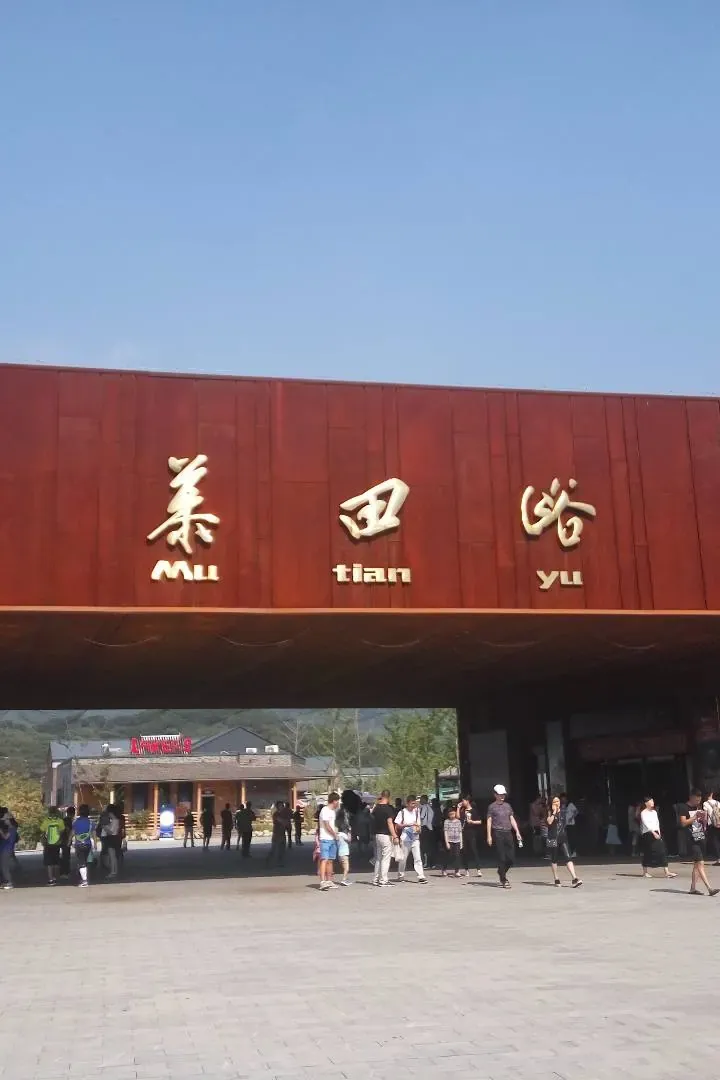
The return is the part that needs planning
Work backwards from two numbers. The last H23 back out of Mutianyu leaves around 16:30. The last 916 Express from Huairou runs at roughly 19:30 in summer and 18:30 in winter.
I came off the wall at 6pm. Whatever else went right that day, that is well past the last minibus, which means the return is a taxi or a ride-hail from Huairou and ¥150 or more back into town. None of this is written on any sign at the gate. Decide your getting-back plan before you start walking, not after.
Why I skipped the tour — and why I am not sure I would now
I did not want a group. Tour buses run someone else’s timetable, they include stops I have no interest in, and I wanted to decide for myself how far along the ridge to walk. That part was worth it. Standing alone on an empty stretch of wall with nothing ahead but the next watchtower is not something a group itinerary hands you, and it is the reason I would still recommend going it alone to anyone travelling solo.
But the arithmetic stops making sense as soon as you are two people. Bus fares plus the taxi you will inevitably need on the way back already approach a shared car, and at three or four people a driver for the day is cheaper and gets you there before the crowds arrive. So: bus if you are alone and genuinely counting money, direct tourist bus or car otherwise. That is the honest answer, and it is not the one I believed at the time.
Why Mutianyu rather than Badaling
I have not been to Badaling, so this is not two visits compared side by side. It is why I ruled it out, plus what the numbers say.
Mutianyu has around 5.4 km of restored wall open, with roughly 20 watchtowers. Badaling opens 3,741 m — 1,176 m south plus 2,565 m north — with 16 watchtowers. So Badaling is not short, contrary to what gets said in passing; it is the same kind of day. What differs is how many people you share it with. Badaling is the most visited section of the wall, it has high-speed rail running to it in about 30 minutes from central Beijing, and the photographs make the point on their own: the wall is packed in a way Mutianyu’s western stretches are not.
The second difference is what you see when you turn around. Mutianyu runs along a forested ridge, with vegetation cover around 96%, so every tower gives you the wall curving away over green hills rather than dry rock. My own day bore that out — the crowd thinned fast the further I walked from the cable car. The stretch near Tower 14 was busy, and deep along the ridge I had long sections almost entirely to myself. Walk west if emptiness is what you are after.
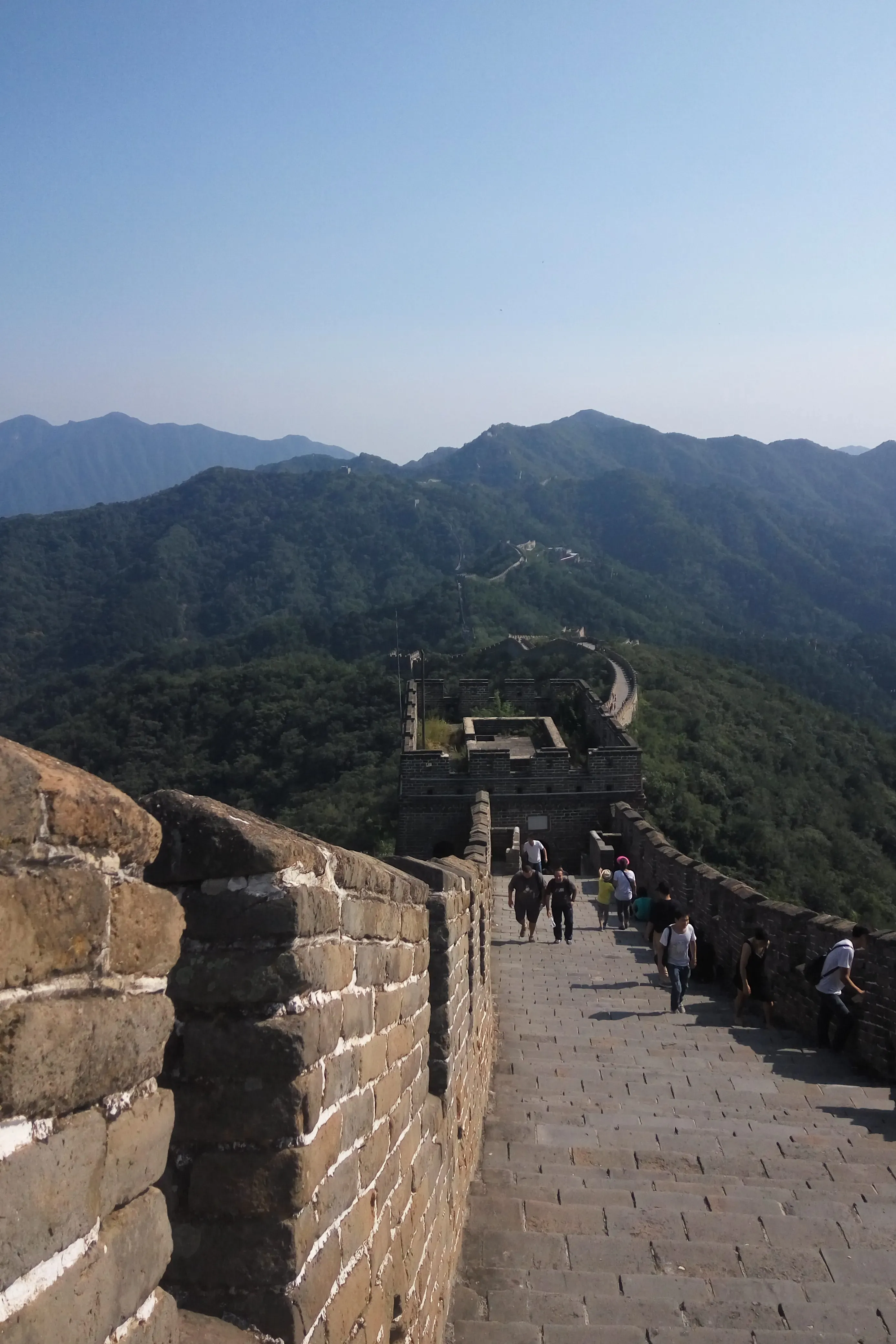
One check worth doing before you plan a long ridge walk in 2026. Parts of the wall have been under restoration: since April 2026 the section above the Hero Slope at Tower 19 up to Tower 20 has been closed, with a detour along the ecological trail outside the wall to reach Towers 21 to 23, and further work around Towers 16 to 17 started in late May. Some of the “walk all the way to Tower 23” guides still ranking were written before those closures.
Three things I wish I had known
Bring more water than seems reasonable. Not because prices up there are a scam — they are not especially — but because you climb in full sun for hours with nowhere to refill. There is no shade on the wall itself; the only relief is stepping into the archway of a watchtower. I spent my second hour rationing and my third regretting it.
The cable car and the chairlift are not interchangeable. Two operators, two ticket booths, tickets do not transfer. The enclosed cable car goes to Tower 14, the open chairlift to Tower 6. I rode the cable car up and walked back down, which worked fine, but if you want the toboggan you need to finish on the Tower 6 side.
I skipped the toboggan, and I slightly regret it. The queue was long, I was already tired, and I was a little scared — which turns out to be a reasonable reaction rather than a personal failing. The rules bar anyone over 60 and children under 3, and discourage pregnant visitors and anyone with heart conditions, high blood pressure or a fear of heights. Glasses have to come off, and if you cannot see well enough to work the brake without them you are not allowed to ride. Next time I will queue anyway. The view coming down is the part everyone remembers.
Practical details
Prices and hours move, so confirm them on the official booking mini-programme before you set off.
- Entry: around ¥40 for adults, ¥20 for students and seniors. Real-name booking — bring your passport, a photo on your phone will not do.
- Shuttle bus: ¥15 return, compulsory.
- Cable car: ¥100 up. Another ¥100 if you ride back down, though combination tickets run closer to ¥140.
- Chairlift up plus toboggan down: ¥100 each sold separately, or around ¥140 combined.
- Peak season hours: roughly 07:30–18:00 on weekdays, 07:30–18:30 at weekends, with ticket sales stopping before closing time.
- Time to allow: I arrived about noon and came down at six, unhurried, with long shade breaks. Three to four hours covers it if you keep moving.
What I would do differently
Leave by eight rather than whenever it suits me. An early start buys you the quiet stretch of ridge, and it puts you back within reach of the last bus instead of hunting for a taxi at dusk. Then take the direct tourist bus, which leaves you free at the site without the group schedule I was avoiding, or split a car. And ride the toboggan down, queue and nerves notwithstanding.
The cheap route worked. But it cost roughly six hours of a Beijing day in transit, and of everything I spent on that trip, the time turned out to be the expensive part.
Getting to the wall is one decision inside a larger one. How to plan a Beijing sightseeing day sets out the rules this fits into — one hard sight per day, planned backwards from the hour it stops letting people in.
For more like this, see city walks and outdoor experiences and the rest of the Beijing guides. If you are planning the wider trip, the four-day Beijing itinerary shows where a wall day fits — and my notes on how much time the Forbidden City needs and on choosing between the Summer Palace and Yuanmingyuan cover the two days most people pair with it.