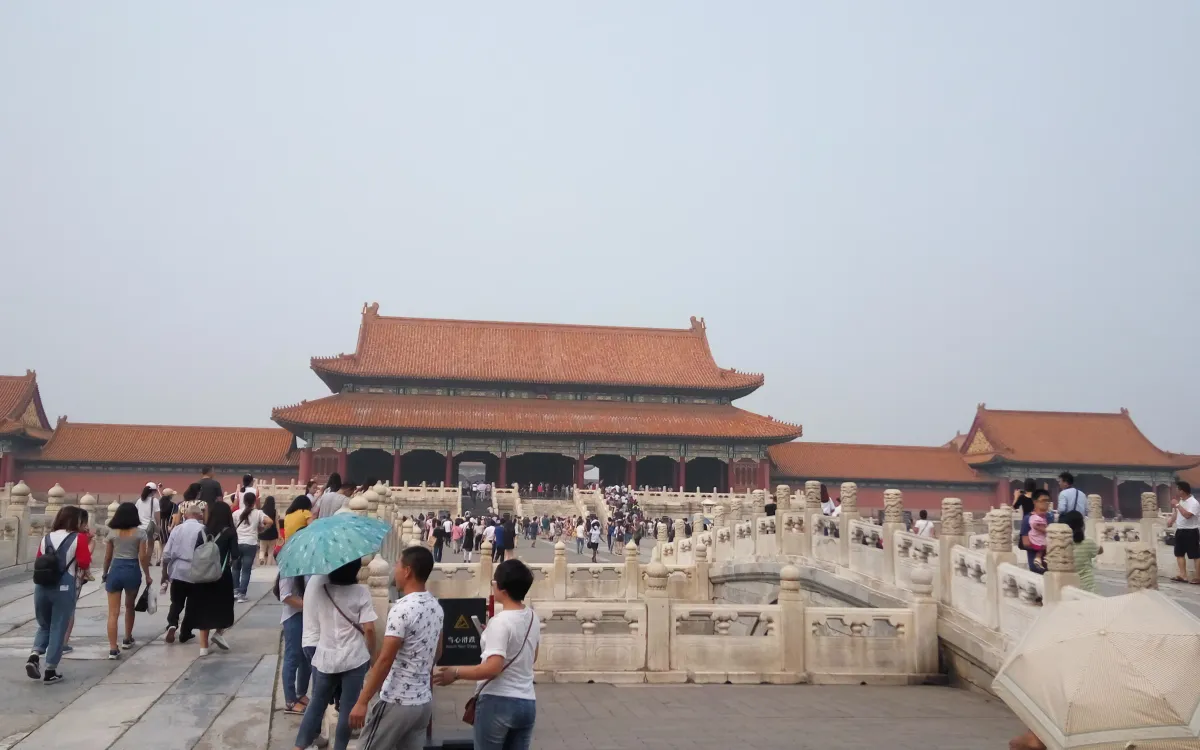
Two hours. I was through the Meridian Gate at 9:30 and back out before noon, and it was enough for the spine of the palace and not remotely enough for the rest of it.
Here is the part I did not expect: those two hours left me more tired than six hours walking the Great Wall.
Why two hours here hurt more than six on the wall
I have thought about why. On the wall you can stop. The towers give you shade, the crowds thin out the further you walk, and nobody minds if you sit on a step for ten minutes with your water.
Inside the palace, there is almost nowhere to sit. The great courtyards offer no shade at all, the crowd moves you along whether or not you want to pause, and everything to eat and drink sits out at the gates — so once you are in, you are walking until you are out. It is not the distance. It is that nothing ever lets you break.
The full route is somewhere around four to six kilometres of walking. Two hours was enough to finish it at a brisk pace, and my legs were done by the end. If you only take one thing from this: book more time than you think you need, and plan to sit down afterwards.
What those two hours actually covered
Roughly half an hour went on security before I was even inside — the queue moves, but not quickly, so build it in. After that it is one straight line north.
The first sight down the central axis is genuinely overwhelming, and it is the one moment that has stayed with me. You come through the gate and the courtyards open away into the distance, one after another, in a way photographs never manage.
From there I went through the three great halls — note that the Hall of Supreme Harmony is viewed from outside, you cannot go in — then the inner court, where all I really remember is the emperor’s bed being absurdly ornate, and finally the Imperial Garden, which I thought was lovely. I also noticed how low the doorways are; you duck more than you expect.
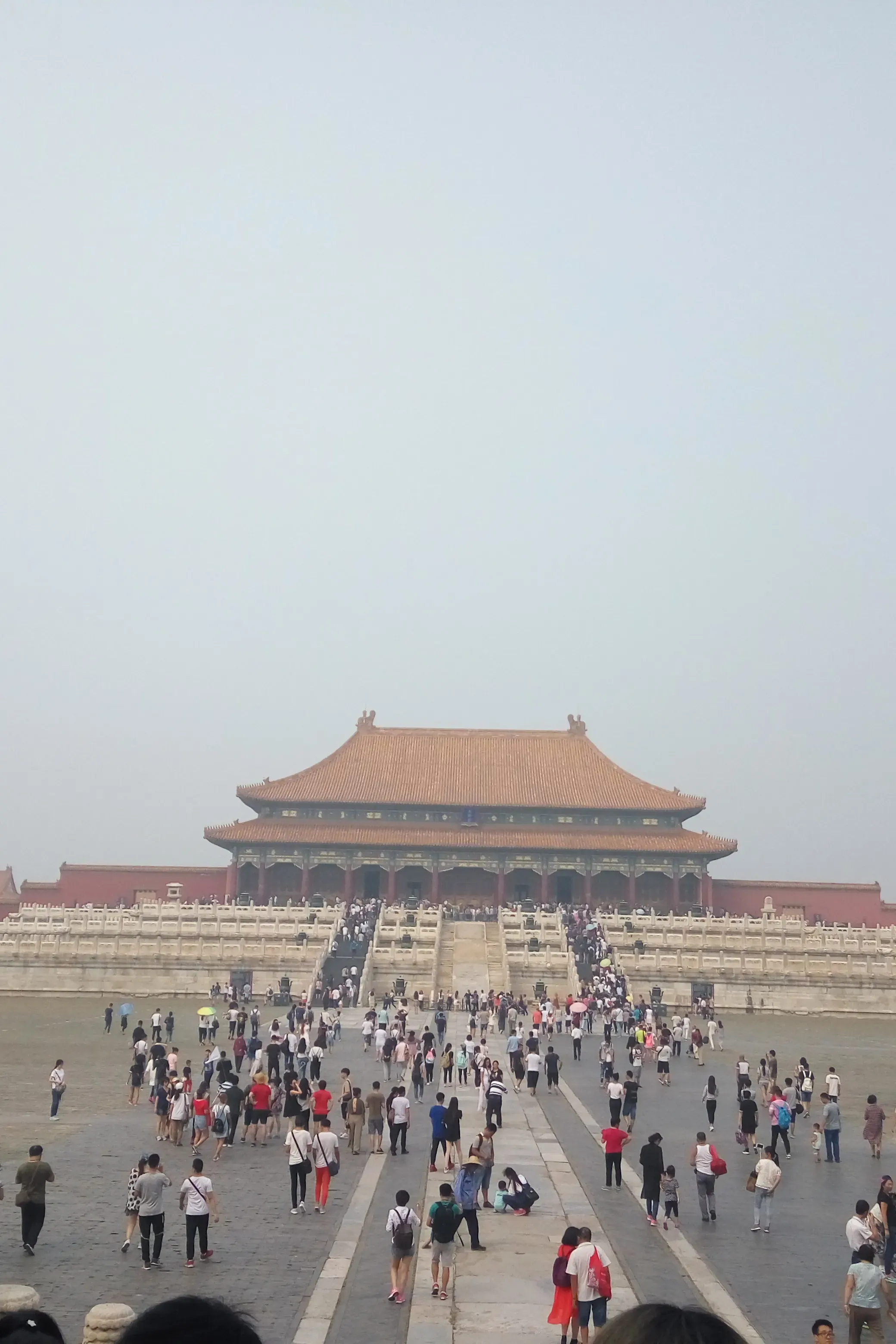
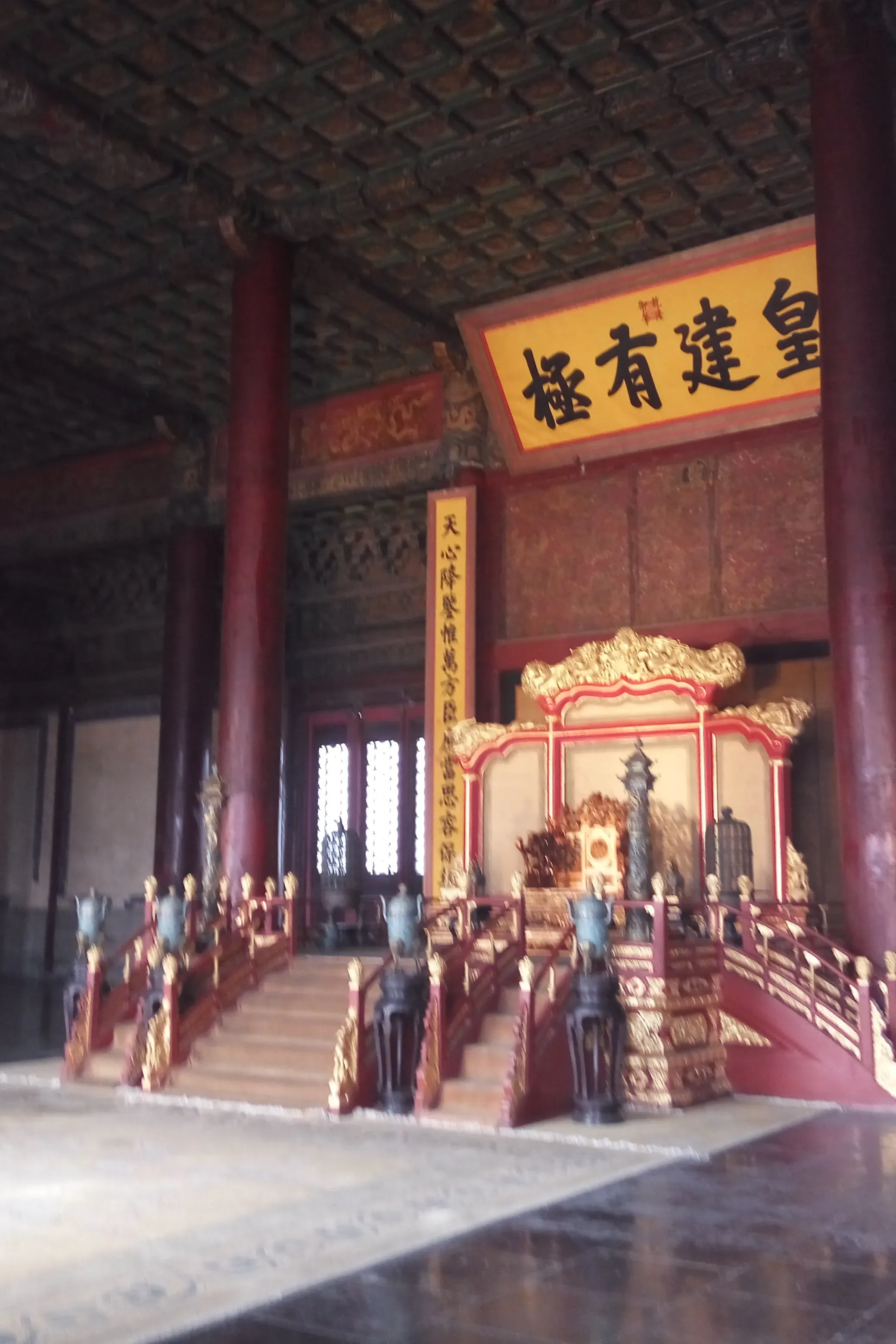
A few interiors you do get to look into from the doorway, and the throne in the Hall of Preserving Harmony is the best of them. But the rule holds for the great hall itself: you stand in the courtyard and you look.
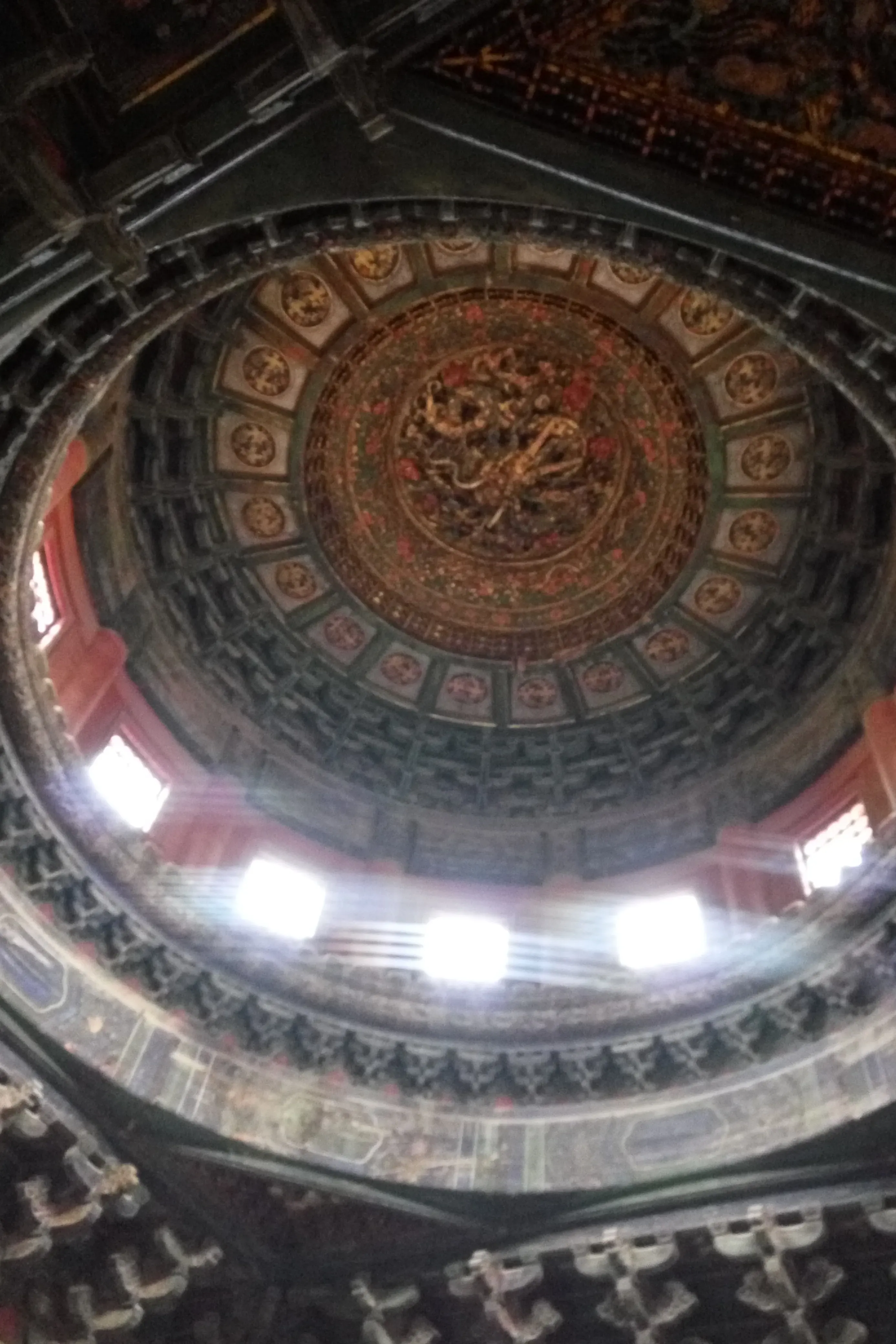
One habit worth taking in: look up. The painted ceilings — the caissons above the thrones and in the garden pavilions — are the detail the crowds never tilt their heads for.
That is it. That is two hours.
I skipped the two famous galleries and do not regret it
The Treasure Gallery and the Clock Gallery sit inside the palace but are not included in the main ticket — they are ¥10 each, bought separately, and they stop admitting visitors at 16:10 in peak season against 16:00 for the gate itself. Every guide tells you they are unmissable.
I did not go, because I am not especially interested in antiquities, and a full day of them would not have changed that. If you care about the collection, book them when you book your entry. If you do not, you are allowed to skip them — the palace itself is not diminished by it.
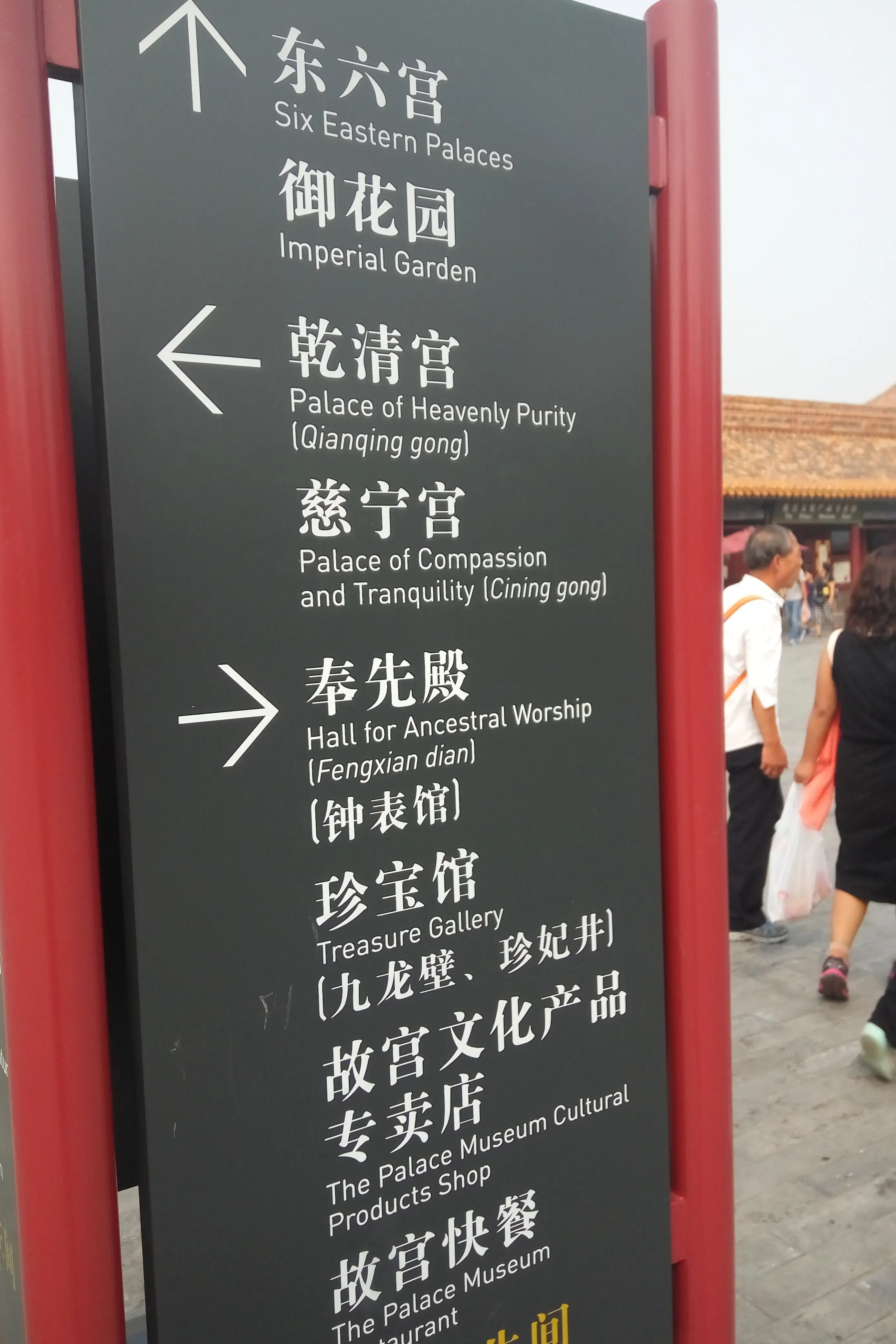
One thing I would change: pay for a real guide
I rented the audio guide. I remember very little of what it told me.
I did not book a human guide, and I think that was the actual mistake. Two hours of walking through large courtyards with no narrative to hold onto became simply tiring, and I suspect that with someone explaining what I was looking at — the symbolism, the succession stories, what the objects were for — the same two hours would have felt entirely different. That is speculation rather than experience, so take it as such, but it is the change I would make first.
Book a week ahead, not a day or two
This is the one place where my own experience no longer matches the rules. I booked mine a day or two ahead, on the mini-programme from my hotel, and it was straightforward — which is exactly why I assumed tickets were easy to come by.
They are not, not any more. Booking opens seven days ahead at 20:00 Beijing time, and only through one official WeChat mini-programme. Peak dates are routinely gone within minutes, so set an alarm for exactly seven days before you want to go — leaving it two days out, as I did, is a gamble rather than a plan.
Two related rules. The museum sells no same-day tickets and has sold nothing at the gate since 2018. And because no third party is authorised to sell tickets at all, every “we guarantee your tickets” reseller is simply lying to you.
Two further rules worth knowing. Tickets are split into morning and afternoon slots, with morning tickets invalid after 12:00 — my 9:30 start was inside the morning window. And the museum is closed all day Mondays, except on public holidays.
One trick I did not use: you can skip the crush approaching from Tiananmen Square entirely by walking along the moat from the Donghua Gate side to the Meridian Gate. Whichever way you come, the Meridian Gate is the only entrance, and you exit at either the north or the east — never the way you came.
What I skipped and actually regret
Not the galleries. Jingshan Park.
It sits directly across the road from the north exit, costs around ¥2, and takes maybe fifteen minutes to climb. The pavilion at the top is the only place in Beijing where you get the entire roofline of the palace in one frame. I was too tired, went back to the hotel instead, and only realised what I had missed when I saw other people’s photographs. Next time it is the first thing I do after walking out of the gate.
Also worth knowing for 2026: parts of the palace close for conservation with little notice. The Hall of Earthly Tranquility and the ceramics gallery at the Hall of Martial Valour have both been shut during 2026, so do not plan a route around any single room.
Practical details
Confirm everything on the official mini-programme before you go — hours and single-room closures move.
- Entry: ¥60 in peak season (April to October), ¥40 the rest of the year. Students ¥20, over-60s half price, under-18s free but still require a booking.
- Treasure and Clock galleries: ¥10 each, not included in entry, last admission 16:10 in peak season.
- Peak hours: 08:30 to 17:00, with the last entry at 16:00. Closed Mondays except on public holidays.
- Which name matters: if you are booking anything, search for the Palace Museum rather than “Gugong” — some platforms still list both, and not all of them are legitimate.
- Time to allow: two hours gets you the spine and nothing else. Half a day if you want to sit down and see the galleries; most of a day if museums are why you came.
- Before you go: book exactly seven days ahead at 20:00, and note that the last entry is 16:00 rather than the 17:00 closing — that final hour is when the tour groups leave and the courtyards empty out.
What I would do differently
Go in at 8:30 rather than 9:30, which buys back the queue and puts me in the first courtyards before the crowds build. Book a human guide instead of an audio set. Walk out of the north gate and straight up Jingshan while I still have legs for it. And eat something before I go in, because once you are through the Meridian Gate the next real option is a long way off.
How long to give the palace is one decision inside a larger one. How to plan a Beijing sightseeing day sets out the rules this fits into — one hard sight per day, planned backwards from the hour it stops letting people in.
For more like this, see city walks and outdoor experiences and the rest of the Beijing guides. If you are planning the wider trip, the four-day Beijing itinerary shows where a palace day fits — and my own notes on the Summer Palace and Yuanmingyuan and on reaching Mutianyu by bus cover the other two days that bookend this one.