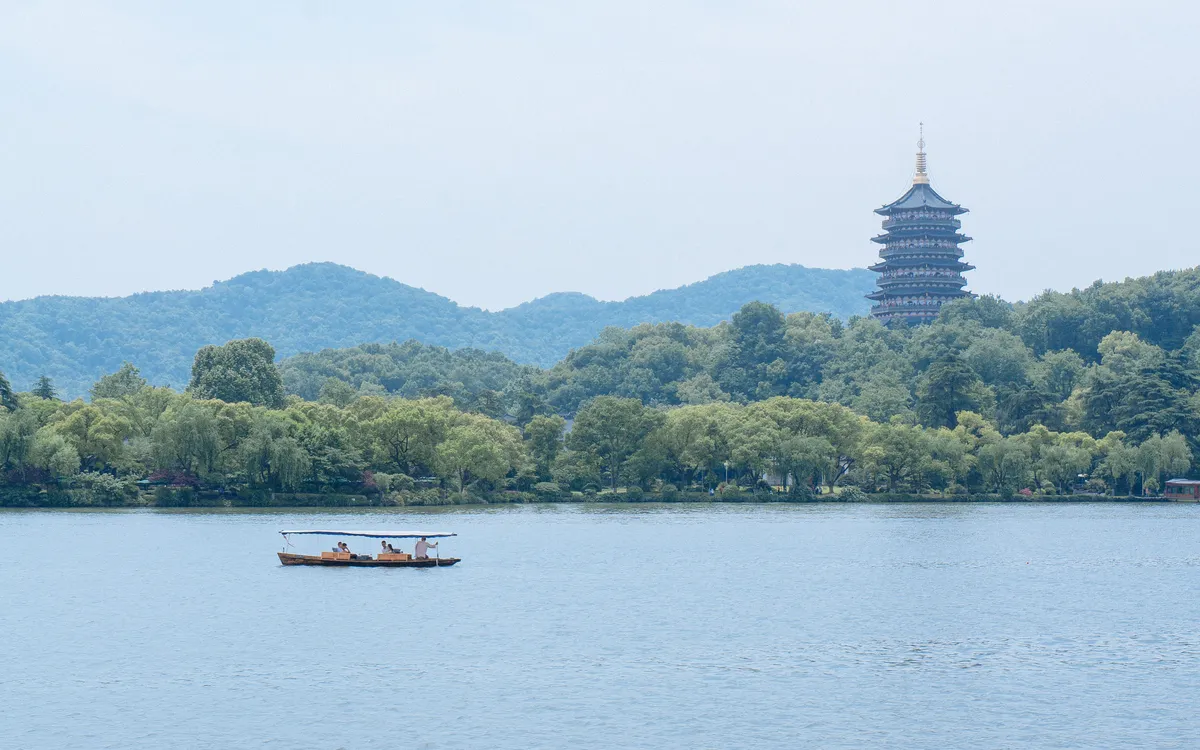
I would not choose between Hangzhou and Suzhou by asking which city is “better.” I would ask what kind of place you want to spend a day inside. Suzhou draws you close to Chinese garden design, stone, windows and old canal streets. Hangzhou gives you the wider space of West Lake and the very different, plant-filled waterways of Xixi Wetland.
Both have culture and both have water. The difference is scale and attention: in Suzhou you notice how a view has been composed; in Hangzhou you give yourself time to move through a much larger landscape. Then check your available days. Suzhou makes an easier single day from Shanghai; Hangzhou rewards an overnight.
I took my parents to Hangzhou for two nights and have not been to Suzhou. So the Hangzhou part below is what we actually did; the Suzhou part is a route built from city visitor information. I want you to know which is which before you book a train.
The short answer
| What you want | I would choose | Why |
|---|---|---|
| Chinese garden aesthetics, history and old streets | Suzhou | Rocks, pavilions and framed views, then a walk by the canal. |
| Open water, a long lake walk and a wetland boat ride | Hangzhou | Two large landscapes with a very different sense of space. |
| One easy day from Shanghai | Suzhou, unless West Lake is your priority | One garden and Pingjiang Road make a focused day; a Hangzhou day should stick to the lake. |
| A night or two to slow down | Hangzhou, if its landscapes appeal to you | West Lake and Xixi deserve separate time, but extra nights do not obligate you to pick Hangzhou. |
The cost and effort matter as much as the photographs:
| Hangzhou | Suzhou | |
|---|---|---|
| What holds your attention | An open lakeshore, changing views across the water and plants close to the boat at Xixi | Intentionally framed views, garden rocks and pavilions, followed by a lived-in canal street |
| Time to allow | A full day for West Lake; a separate half-day or more for Xixi | A full day for one garden, Pingjiang Road and possibly the museum |
| Walking | Easy to underestimate; my parents were tired after just over three hours around part of West Lake | Old-city stops can be grouped, but a garden and canal streets still involve walking |
| Main sight cost | West Lake’s open paths are free; allow roughly ¥70–80 for Xixi entry, then check your boat option | Allow roughly ¥70–90 for a major garden; walking the canal streets needs no garden ticket |
| Booking friction | Xixi has different entrances, boat products and packages | Reserve a popular garden; add Suzhou Museum only if you have a timed entry |
These are planning allowances, not package prices. Trains, taxis, meals, other sights and hotels are extra. Official Suzhou pages show different peak-season garden figures, so confirm the live price before paying. The Humble Administrator’s Garden visitor page and the city’s suggested route are useful starting points; for Xixi, check the park’s current ticket options rather than assuming every small boat costs the same.
Hangzhou: the landscape has room to breathe
This is the city I would choose when I want to be outside for the lake and the wetland themselves. West Lake is a broad cultural landscape shaped by causeways, temples and generations of poets — not untouched nature — but you experience it at a much larger scale than a garden courtyard. UNESCO’s description of West Lake makes that cultural layer clear.
Xixi changes the mood again. From a small boat, the water narrows and the plants come close. You do not have to be a botany person to feel the difference between that and looking across West Lake.
We took the train from Shanghai Hongqiao to Hangzhou East, then a taxi to our hotel near Qingchun East Road. We stayed two nights. That gave West Lake and Xixi Wetland room in the trip without racing between them.
I would not tell every visitor to stay on Qingchun East Road because we did. It worked as our base. The useful lesson was simpler: after a train journey with parents and luggage, taking a taxi to the hotel was worth the ease.
West Lake: the walk is longer than it looks
We began at the upper side of the lake on the map and walked down, covering roughly half of it. We did not take a sightseeing vehicle. After more than three hours, my parents were tired, and we stopped rather than turn the lake into an endurance test.
That is the detail I would plan around. West Lake looks like one stop on an itinerary, but it can quietly become the whole day. With older parents, children or anyone who does not want a long walk, choose a section in advance and leave yourself an exit plan. You do not have to complete a circuit to feel you have been there.
If you have only one day for Hangzhou, I would do West Lake well and stop. I would not put Xixi on the same timetable just because both fit inside the same city.
Xixi: the boat was the part I would repeat
Xixi Wetland did not feel like a smaller West Lake. From the boat, the plants were close to us and the water felt narrow and enclosed, rather than a wide open view across a lake. That change of scale is why I would keep both in a two-day Hangzhou plan.
We took a small boat with a boatman, with some electric assistance. There was no queue when we went. I cannot remember which entrance we used or exactly what we paid, and I am not going to guess. I remember the boatman making music — perhaps singing or playing a flute — and how easy it was to sit there and let the wetland come close.
I would book a small-boat option again. Just check whether the listing means a shared seat, a private boat, or a package with park entry: those are not the same price. Do not use the cheapest electric-boat fare as a promise of what the boat we took will cost.
Hangzhou also has exhibitions, performances and seasonal cultural events. I would treat one as a bonus if it is on during your dates, not a fixed part of this route or something I personally did. The city has, for example, documented art displays near West Lake and Xixi’s dragon-boat culture programme; check the current calendar before planning around any event.
One food warning, not a verdict on the city
West Lake vinegar fish was the dish I remember for the wrong reason. It is a Hangzhou specialty, but I did not enjoy the version we ate. Our other meals were ordinary stir-fried dishes that I cannot now recommend or warn you away from by name.
I would go back for the lake and the wetland. I would not build the trip around that one famous fish.
Suzhou: a landscape you look at up close
I have not been to Suzhou, but I do want to go. What attracts me is the literati sensibility: the idea that rocks, water, plants, buildings and even the view through a window can be arranged into a small, considered world. UNESCO describes the classical gardens as miniature landscapes that connect Chinese painting, poetry, craftsmanship and the lives of earlier scholars.
The gardens are outdoors, but not open-air in the same way as West Lake. You pass through courtyards, halls and covered corridors; a rockery or a pavilion changes what you can see next. That intimate, almost room-by-room rhythm is what I think you are choosing when you choose Suzhou. It is a different form of nature and culture together, not simply “less scenery” than Hangzhou.
Based on the city’s old-town route, I would use a first visit for one classical garden and one canal-side neighbourhood, not a sprint through three gardens.
The Humble Administrator’s Garden gives you the designed views Suzhou is known for. Then walk Pingjiang Road: the city’s description is of a street running alongside a canal, with bridges and waterside houses. Suzhou is not just standing still in courtyards. It gives you a different kind of walking from Hangzhou’s lakeside paths.
If you want an indoor stop, Suzhou Museum sits in the same broad old-city area. Treat it as optional, not automatic. The city says the museum uses timed reservations released up to seven days ahead. If you do not have a slot, spend the time on the garden and streets instead of reorganising the day around a missed booking.
For a first-timer with one day, I would allow roughly 5–7 hours on the ground, including a meal and unhurried walking, before the train back. That is my planning allowance, not an official tour length. A garden can take the main block; Pingjiang Road can take the other. If your group tires easily, leave the museum out.
Suzhou is the choice I would make if someone likes Chinese history and aesthetics, deliberately composed spaces, and old canal streets. You do not need to know the names of the rocks to enjoy them. You just need to be happy slowing down for details rather than seeking the biggest view. I have not personally tested this route, so its practical stops are sourced rather than presented as my own experience.
The train is not the whole journey
Fast trains make both cities sound like quick hops: Suzhou can be around half an hour from Shanghai on a suitable service, while Hangzhou is often around an hour. But that is platform-to-platform time. It does not include getting to Shanghai Hongqiao, security, finding the right exit, or crossing town after arrival.
Our Hangzhou journey ended at Hangzhou East, not at the edge of West Lake. We took a taxi to our hotel first. In Suzhou, check whether your ticket arrives at Suzhou Railway Station or Suzhou North before you build an old-city plan. The city lists a Line 6 stop beside the Humble Administrator’s Garden and Suzhou Museum, which helps with local navigation, but your arrival station still matters.
Use 12306 for the actual date, fare and station names, and read my China transport guide if this is your first high-speed train trip. I would not choose between these cities based on a headline train time alone.
One day, two nights, or both?
With one day, start with your interests. Choose Suzhou for a garden and the old canal streets; choose Hangzhou if it is the open sweep of West Lake that you have been picturing. If you truly have no preference, Suzhou is the simpler day to organise from Shanghai. If you choose Hangzhou, give the lake the whole visit rather than squeezing in Xixi too.
With one night, Hangzhou becomes easier to enjoy because you can separate arrival and lake time from the wetland. We stayed two nights, which was comfortable with my parents, but I would not call two nights mandatory. A traveller who loves Chinese gardens more than broad scenery could just as reasonably use that extra night to see Suzhou at a slower pace.
If you have enough days for both, do not force them into one day or treat them as identical stops. Suzhou is the garden-and-canal day; Hangzhou is the lake-and-wetland stay. Your time, not a supposed ranking of the cities, should decide whether that is sensible.
Do you still need a water town?
My advice is do not automatically add Zhujiajiao, Zhouzhuang or another Jiangnan water town after you have already planned West Lake, Xixi or Suzhou’s canals. A short Shanghai trip has better uses for an extra day than collecting every nearby place with water.
That is a time-allocation rule, not a claim that West Lake is a traditional water town. The scenery and built environment are different. If a particular canal town is the thing you most want to see, go. Just make it a deliberate choice, not an extra box you feel obliged to tick.
My take
I chose Hangzhou for that trip with my parents: a lake walk we could stop when we were tired, then a small boat among the wetland plants. I would do it again, with a shorter planned walk at West Lake.
I still want to go to Suzhou. The garden rocks, framed views and canal streets answer a different curiosity of mine. Suzhou is not the place you settle for when you lack time for Hangzhou, and Hangzhou is not the place you go because you are not interested in Chinese culture. Pick the kind of looking you enjoy; then use the travel-time and budget details above to make it work.
Before adding either city, make sure you have enough time for the Shanghai experiences worth prioritising on a first visit. If you pick Hangzhou, the Hangzhou destination page is the next place to plan the stay.
If you have more time and want to follow the UNESCO-and-tea thread beyond these two cities, my three-day Wuyi Mountains guide covers a bamboo raft on the Nine-Bend Stream and a Wuyi rock-tea tasting. Give Wuyi its own leg of the trip rather than treating it as another Shanghai day trip.